
Yard Drainage Solutions for Standing Water, Runoff, and Soggy Lawns
The most common yard drainage solutions are French drains, channel drains, catch basins, dry wells, downspout extensions, regrading, and swales. The right one depends on your specific problem: a French drain moves water away from a soggy lawn, a channel drain catches runoff off a patio or driveway, regrading fixes water pooling near the foundation, and a dry well handles water where there is nowhere else to send it. Most yards need a combination.
At CC Lawn Pros, we design and install drainage and irrigation systems across Corpus Christi and the surrounding coastal communities, from Portland and Ingleside to Rockport and Kingsville. Our flat lots, heavy clay soil, and intense Gulf downpours make drainage one of the most requested fixes we handle, so the solutions below are matched to how water actually behaves here.
Start by diagnosing the problem, then match it to the right solution. This guide walks through both.
In This Guide
- First, diagnose your drainage problem: Find the cause before the fix.
- Solutions that move water away: French drains, channel drains, catch basins.
- Solutions that collect or absorb water: Dry wells, rain gardens, dry creek beds.
- Solutions that redirect water at the source: Downspouts, grading, and swales.
- Drainage solutions compared: Cost and best use for each.
- Drainage challenges in South Texas: Clay soil, flat lots, coastal rain.
- DIY vs professional drainage: When to call a pro.
- Frequently asked questions: Quick answers to common questions.
First, Diagnose Your Drainage Problem
Before choosing a solution, figure out what water is actually doing in your yard. The same fix that solves a soggy lawn can be useless against water pooling at the foundation, so the diagnosis drives the whole plan.
Standing Water After Rain
If water sits in the same low spot for hours or days after a storm, you have a collection and a soil problem. The ground either slopes toward that spot or the soil drains too slowly to absorb the water.
The usual fixes are a French drain to carry the water out, a catch basin to capture it, or regrading to remove the low spot entirely. Which one fits depends on whether there is a lower point nearby to drain toward, and how quickly your soil lets water sink in.
Water Pooling Near the Foundation
Water against the foundation is the most urgent problem, because it threatens the structure and can lead to interior moisture. It almost always means the soil slopes toward the house instead of away from it.
The core fix is regrading the first several feet around the home to slope away, backed up by downspout extensions that discharge well past the foundation. We cover both further down.
Soggy Lawn or Low Spots
A lawn that stays spongy long after everyone else's has dried is holding water in the root zone. On our clay soil this is common, since clay drains slowly and compacts easily under foot traffic and mowers.
A French drain or a series of connected catch basins pulls that subsurface water away, and topdressing plus aeration helps the surface recover. If mowing that wet turf is a struggle, our guide on
mowing a wet lawn safely covers how to avoid rutting it further.
Solutions That Move Water Away
These are the workhorse solutions. They collect water and carry it to a safe discharge point, such as the street, a drainage easement, or a lower area of the property.
French Drains
A French drain is a gravel-filled trench with a perforated pipe wrapped in landscape fabric that collects subsurface water and channels it away. It is the go-to solution for a chronically soggy lawn or a persistent wet area.
The keys to one that lasts are proper slope along the pipe, quality fabric to keep silt out, and clean gravel that will not clog. Done right, a French drain can quietly solve a problem that has plagued a yard for years.
The slope is what most DIY versions get wrong. The pipe needs a consistent fall toward the outlet, usually about one inch per ten feet, or the water sits in the trench instead of moving out. Wrapping the perforated pipe fully in landscape fabric and bedding it in washed gravel keeps our fine clay from silting the pipe shut within a season.
Channel and Trench Drains
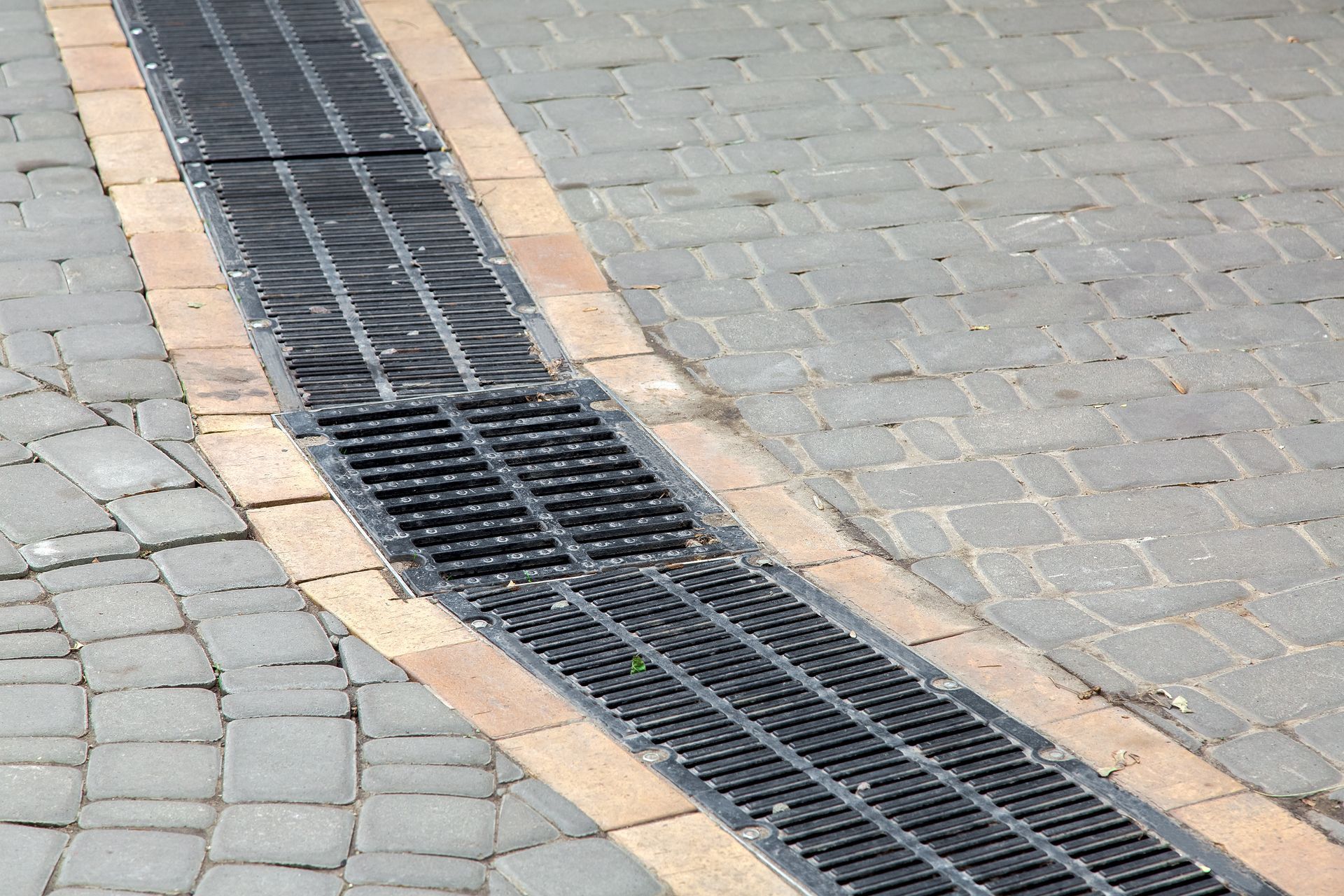
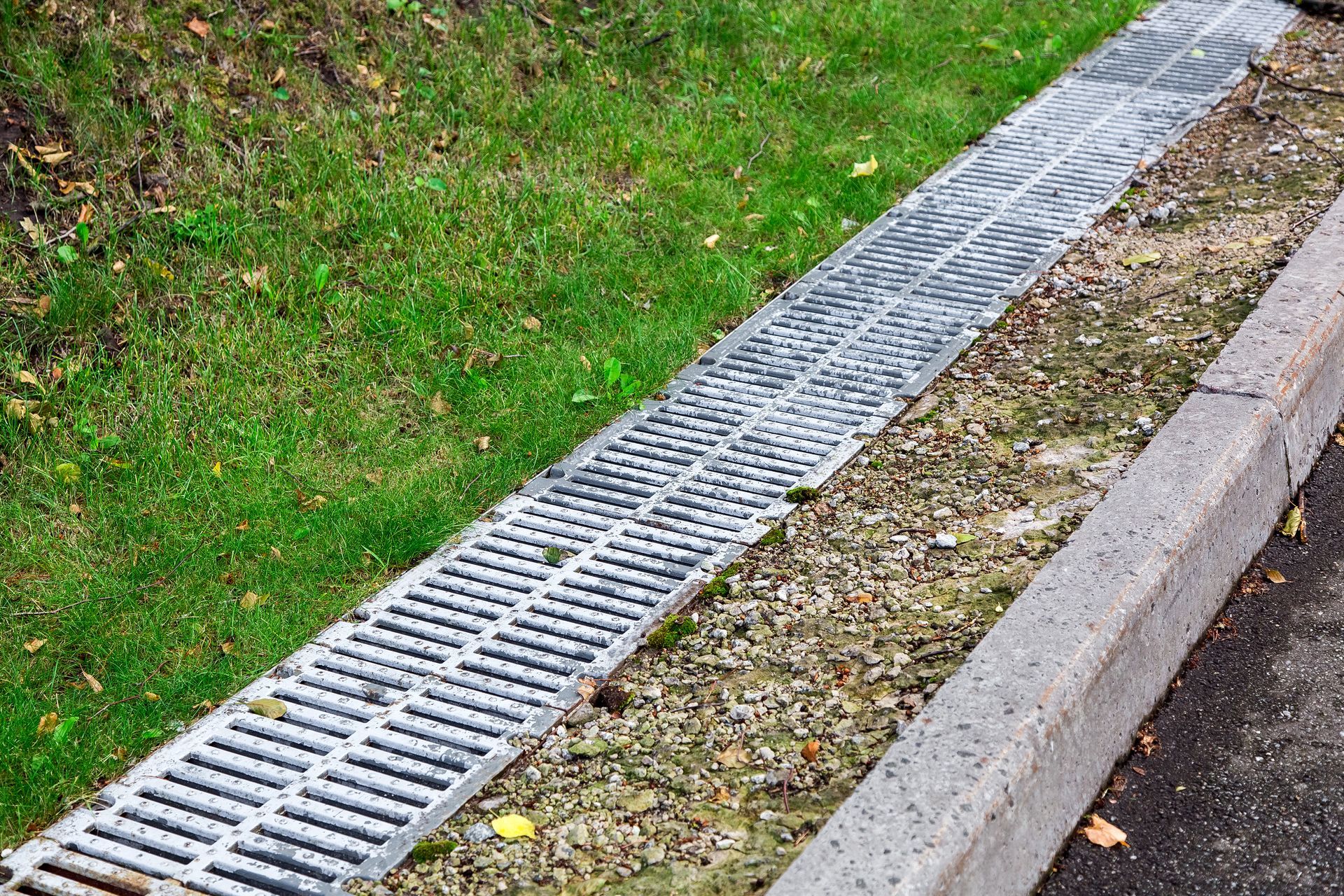
A channel drain, also called a trench drain, is a long narrow grate set flush into a hard surface. It captures sheeting runoff before it reaches your lawn, garage, or a low doorway.
- Along a driveway to stop water from sheeting into the garage.
- At the edge of a patio to keep the seating area dry.
- Across a walkway where runoff crosses a path.
Because it handles surface water on paving, it pairs naturally with hardscape projects.
Catch Basins and Yard Inlets
A catch basin is a boxed inlet with a grate that collects standing water from a low spot and feeds it into an underground pipe. Several basins can be connected across a yard to move water from multiple problem areas to one outlet.
A sediment sump at the bottom traps debris so the pipe does not clog, which is what keeps the system working season after season.
Grate size and placement matter more than they seem. A grate set even slightly high leaves a ring of standing water around it, so the basin has to sit at the true low point and flush with the surrounding grade. In a large yard, several basins tied into one outlet pipe let you drain multiple problem areas without a maze of trenches.
Solutions That Collect or Absorb Water
When there is no lower point to drain toward, which is common on our flat coastal lots, the answer is to hold and slowly release the water instead of moving it off-site.
Dry Wells
A dry well is a buried, gravel-filled or hollow chamber that receives collected water and lets it seep into the surrounding soil over time. It is the standard solution when a property has nowhere obvious to discharge.
Dry wells work best when paired with a catch basin or French drain feeding into them, and they need to be sized for both your rainfall and how fast your soil absorbs water. On tight clay, they have to be larger to compensate for slow absorption.
A percolation test tells you how much your soil can actually take. Dig a hole, fill it with water, and time how long it drains; slow results mean the well needs more volume or a wider footprint. Skipping this step is why an undersized dry well overflows in the first real storm.
Rain Gardens and Dry Creek Beds
A rain garden is a planted low area that collects runoff and lets water-tolerant plants and soil absorb it. A dry creek bed is a rock-lined channel that both carries water during storms and looks like a landscape feature when dry.
Both turn a drainage fix into something attractive:
- Rain gardens suit low spots and work well with native, water-tolerant plants.
- Dry creek beds guide runoff along a defined path and double as a design element.
- Both reduce the volume of water your other drainage has to handle.
Solutions That Redirect Water at the Source
The cheapest fixes address water before it ever becomes a yard-wide problem. Often these solve the issue on their own, or dramatically reduce what the bigger systems have to handle.
Downspout Extensions and Pop-Up Emitters
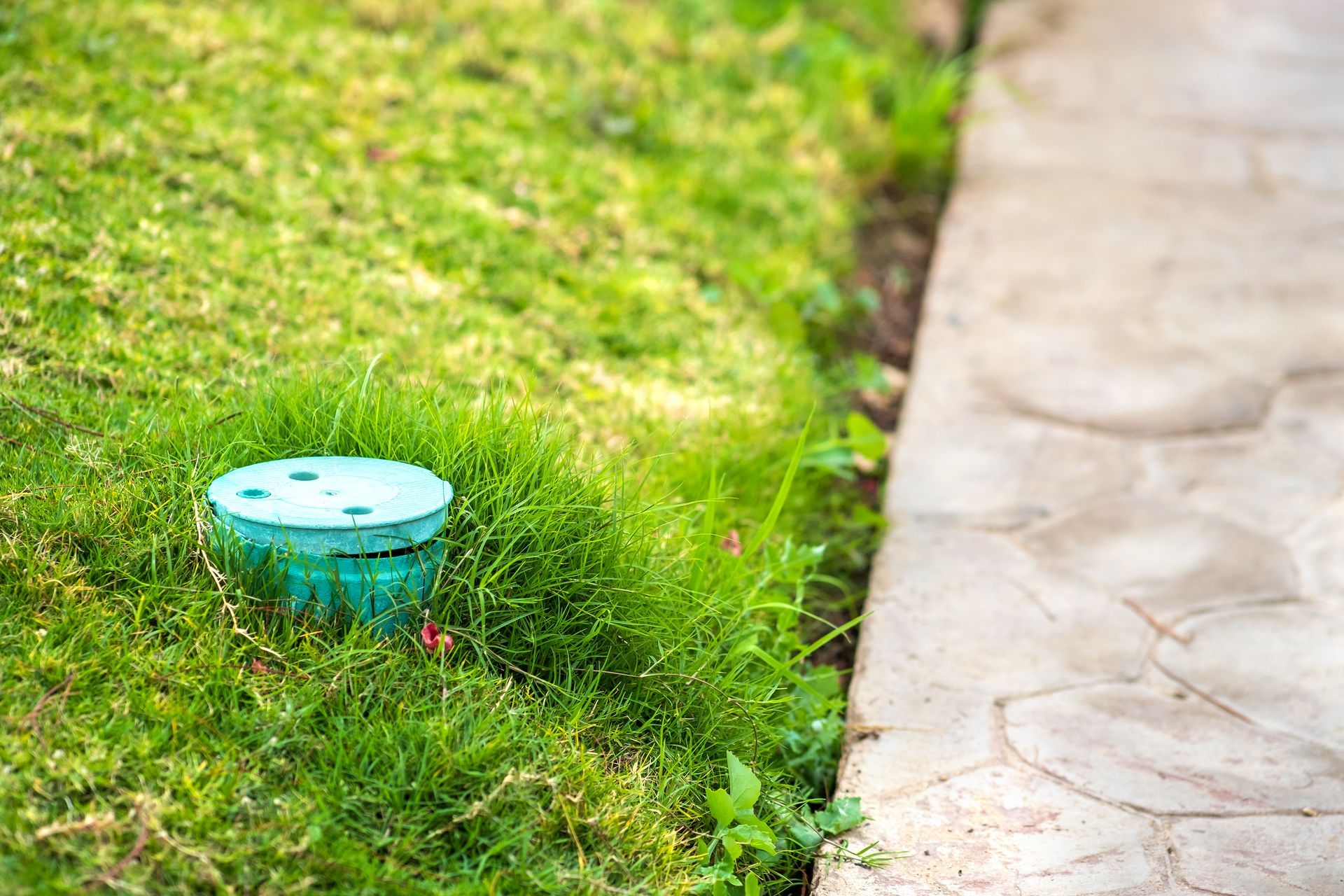
Gutters dump a surprising volume of water right at the foundation. Extending downspouts with buried pipe that surfaces through a pop-up emitter several feet away is one of the highest-impact, lowest-cost fixes available.
The emitter stays flush with the lawn and opens only under water pressure, so it discharges the roof runoff well clear of the house without an ugly pipe across the yard.
Because roof runoff is often the single largest source of foundation water, fixing the downspouts first can shrink or even eliminate the need for larger systems. It is the cheapest place to start on almost any drainage problem.
Regrading and Swales
Regrading reshapes the soil so the ground slopes away from your home and toward a safe outlet. It is the foundational fix for foundation pooling and broad low areas.
A swale is a shallow, gently sloped channel, often grassed, that guides water along a planned route. Swales move large volumes across a property without pipe and blend into the lawn. On sloped sections, a
retaining wall can be built with drainage behind it to manage water and hold the grade at the same time.
Yard Drainage Solutions Compared
Each solution fits a different problem and budget. Use the table to match your issue to the likely fix before you get a quote.
| Solution | Best For | Relative Cost | Moves or Holds Water |
|---|---|---|---|
| Downspout extension | Water at the foundation from gutters | Low | Redirects |
| Regrading / swale | Foundation pooling, broad low areas | Low to mid | Redirects |
| French drain | Soggy lawn, chronic wet zones | Mid | Moves away |
| Channel / trench drain | Runoff off patios and driveways | Mid | Moves away |
| Catch basin system | Standing water in defined low spots | Mid | Moves away |
| Dry well | Nowhere to discharge, flat lots | Mid to high | Holds and releases |
| Rain garden / creek bed | Runoff volume plus curb appeal | Low to mid | Holds and absorbs |
Most yards use a combination, such as downspout extensions and regrading to redirect the easy water, then a French drain and dry well for what remains.
Drainage Challenges Specific to South Texas
Corpus Christi yards present a particular mix of conditions, and a solution designed for a hilly, sandy lot elsewhere often fails here. Local drainage has to account for our soil and our storms.
Clay Soil and Flat Lots
Our heavy clay soil absorbs water slowly and holds it once saturated, which is why standing water lingers. Flat lots make it worse, since there is little natural slope to carry water away.
This combination is why dry wells often need to be oversized and why regrading and pumped or piped outlets matter so much here. Simply digging a hole and hoping it drains rarely works on clay.
Heavy Coastal Downpours
Gulf Coast storms drop a lot of rain in a short window, so drainage has to handle peak volume, not just average rainfall. A system sized for a light drizzle will overflow in a real storm.
Pairing surface collection like catch basins with subsurface capacity like a dry well gives a yard the ability to take a heavy downpour without flooding. Keeping soil healthy with proper
irrigation also helps it absorb rather than shed water.
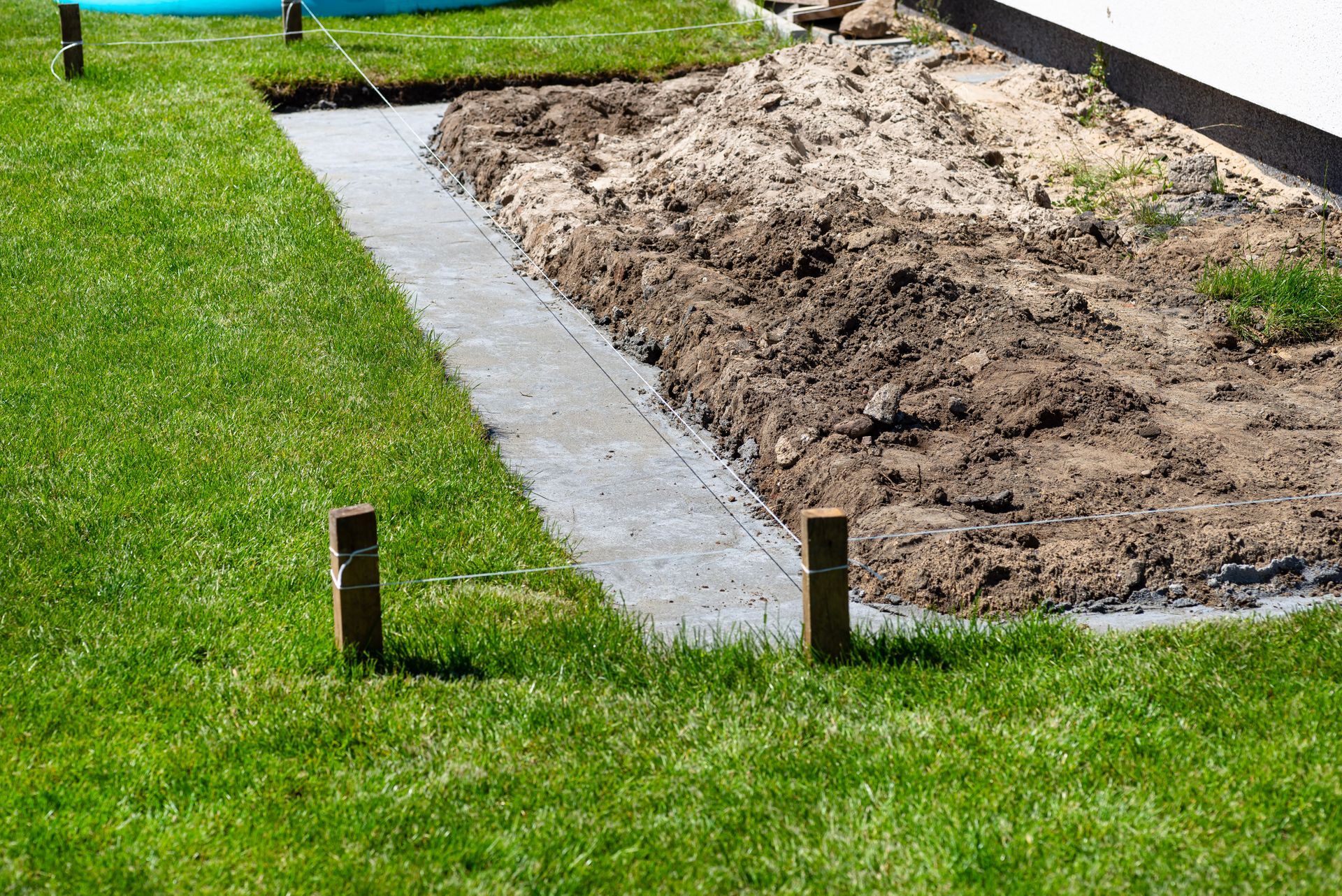
DIY vs Professional Drainage
Some drainage work is a reasonable weekend project, and some needs a pro. Knowing which is which saves both money and repeat repairs.
What You Can Often DIY
- Extending downspouts with above-ground or shallow buried pipe.
- Adding a pop-up emitter at the end of a downspout run.
- Building a small rain garden in an existing low spot.
When to Call a Pro
Anything involving slope, buried pipe over distance, connecting multiple inlets, or water near the foundation is worth a professional. Getting the slope and outlet wrong is the most common reason DIY drainage fails, and by then the trench is already dug.
A pro also confirms where the water can legally and safely discharge, which matters on tight lots where the wrong outlet just moves the problem to a neighbor. Our
drainage and irrigation team designs the full system so it works in the first heavy rain, not the third revision.
Ready to Fix Your Drainage for Good?
Standing water, runoff, and soggy lawns almost always trace back to a fixable cause. The trick is matching the right solution to your specific problem and sizing it for our clay soil and coastal storms.
At CC Lawn Pros, we diagnose the actual water path in your yard and design a system that holds up. When you are ready,
reach out for a consultation or explore our
drainage and irrigation services to see how we handle Corpus Christi drainage.
Frequently Asked Questions