
Fire Pit Ideas That Make Outdoor Spaces More Usable in Cooler Weather
Quick Answer: A fire pit is one of the simplest ways to get more use out of your backyard once the evenings turn cool, and along the Texas coast that means most of the year. The best ideas come down to a few choices: your fuel type (wood-burning for ambiance, gas for convenience), your material (durable stone, concrete, or pavers that handle our humid, salty air), and whether you build it into a patio or keep it portable. Get those right, and you have a gathering spot that works from the first cool night of fall well into spring.
At Lawn Pros, we design and build outdoor living spaces across Corpus Christi and the Coastal Bend, including fire pits and the patios they anchor, so we see firsthand what actually holds up and gets used here. This guide walks through the ideas worth considering, weighted for our coastal climate, so you can plan a space your family will actually spend time in.
Why a Fire Pit Works So Well Here
In much of the country a fire pit gets a few months of use before the cold shuts the backyard down. Along the Texas coast, the opposite is true. Our mild winters mean a fire pit is less about surviving the cold and more about making cool, comfortable evenings something you actually want to spend outside.
That changes how you should think about the investment. A fire pit here is not a seasonal novelty, it is a year-round extension of your living space, which makes it one of the higher-value additions you can make to a Coastal Bend backyard.
Extending Your Outdoor Season
From the first cool front in fall through the mild stretches of winter and into spring, a fire pit gives you a reason to be outside after dark. It anchors a space where people gather, turning a patio that might otherwise sit empty on a cool evening into the best seat in the house.
The summer heat here is the reason many backyards go unused for months, so the cooler season is precisely when outdoor living comes alive on the coast. A fire pit leans into that rhythm. Fall football weekends, holiday gatherings, and crisp spring evenings all become opportunities to be outside, and the fire gives people a natural place to settle in and stay a while rather than drifting back indoors.
A Focal Point That Adds Value
Beyond the comfort, a well-built fire pit is a genuine feature that adds appeal and function to a home. It draws people together, defines an outdoor room, and gives your yard a purpose beyond looking nice from the window. For many homeowners, it becomes the part of the yard they use most.
It is also a feature buyers notice. Outdoor living space is a strong selling point in South Texas, and a permanent, well-designed fire pit signals a backyard that is ready to enjoy rather than a project waiting to happen. Even if a sale is years away, that combination of daily use now and added appeal later is what makes a fire pit one of the more satisfying backyard investments.
Wood-Burning vs. Gas Fire Pits
The first real decision is fuel, because it shapes everything from cost to daily use. Both wood-burning and gas fire pits have a place, and the right one depends on how you plan to use it and how much convenience matters to you.
Neither is better in the abstract. It comes down to the experience you want and how much upkeep you are willing to do.
The Trade-Offs
Here is how the common fuel options compare on the things that matter most.
| Fire Pit Type | Best For | Keep in Mind |
|---|---|---|
| Wood-burning | Crackle, aroma, lower upfront cost | Needs wood storage, cleaning, and smoke management |
| Propane gas | Instant on and off, no smoke | Higher setup cost, tank to refill or hide |
| Natural gas | Convenience with no refilling | Requires a gas line run to the spot |
Which One Fits You
If you love the crackle and smell of a real fire and do not mind tending it, wood-burning is hard to beat and costs less to install. If you want to flip a switch, enjoy the fire, and turn it off with no cleanup, gas is the better fit, and running a natural gas line during a patio build means you never handle a tank. On breezy coastal evenings, gas also gives you a steadier flame and no blowing embers to manage.
Materials That Last on the Coast
Material choice is where our climate really matters. Corpus Christi's humidity and salt-laden air are hard on outdoor features, so the material you pick should be chosen for durability as much as looks.
The good news is that the materials that hold up best here are also among the most attractive, so you rarely have to choose between the two.
Durable, Good-Looking Options
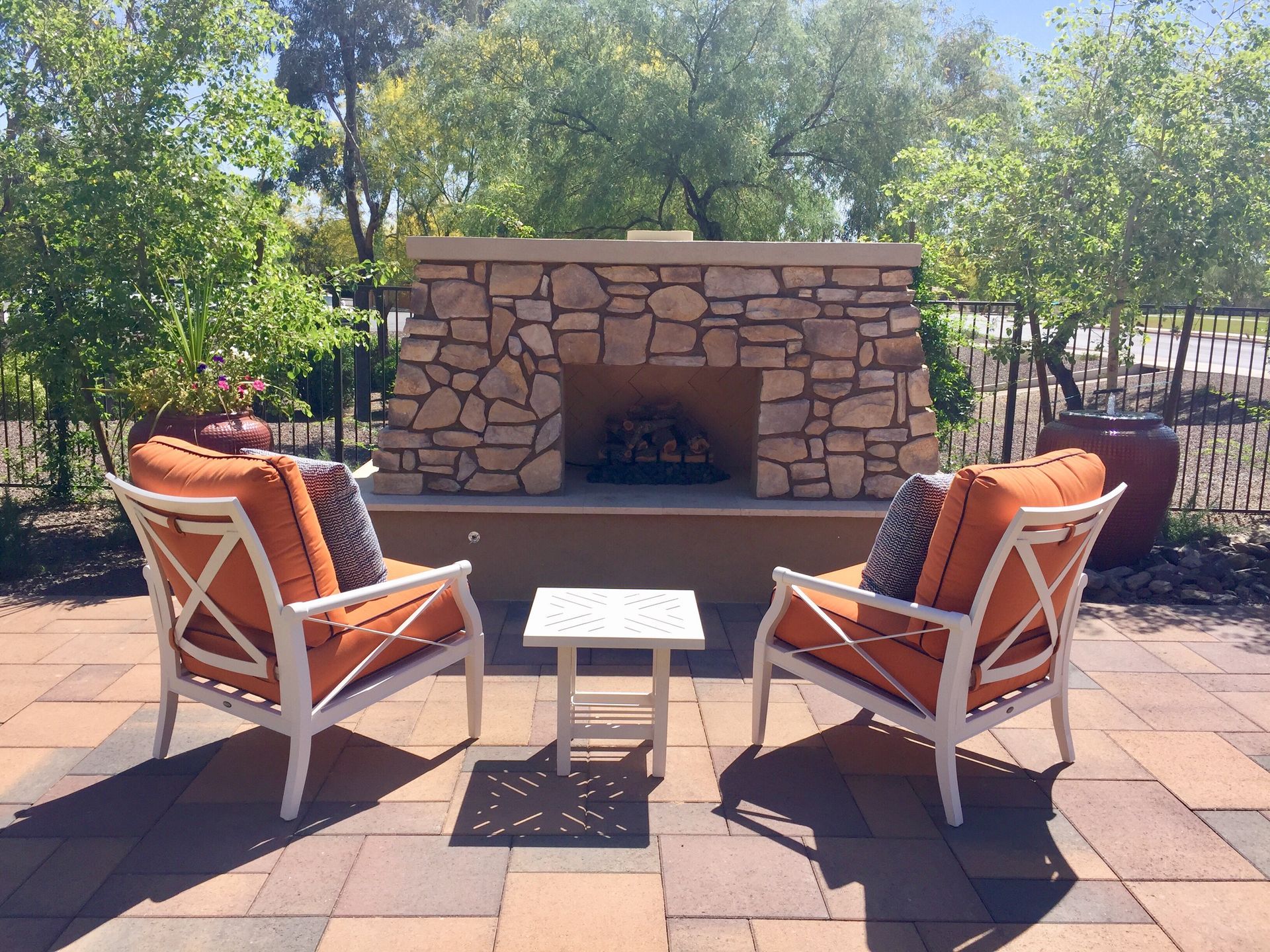
Natural stone and flagstone are classic choices that weather coastal conditions well and bring a timeless look. Concrete and pavers are durable, versatile, and easy to match to an existing patio, and they let you shape the fire pit to fit your space, whether round for a classic gathering feel or square and linear for a modern look. These masonry materials stand up to humidity and salt far better than lower-grade metal, which can corrode quickly in coastal air.
If you do prefer the look of metal, stainless steel or a quality corten finish holds up better than cheap painted steel, though even then a cover extends its life considerably. For a fire feature meant to last decades, though, a masonry pit built into or beside a paver patio is the choice that consistently rewards the investment here. It resists the elements, needs little upkeep beyond the occasional cleaning, and keeps its looks year after year in a climate that is unforgiving to lesser materials.
Matching Your Hardscape
One of the most effective ideas is to build the fire pit from the same material as your patio or walkways, so it reads as part of a cohesive design rather than an add-on. Our
paver patios and walkways can be designed around a fire feature from the start, and our dedicated
fire pits and fireplaces
service covers the options in more detail.
Built-In vs. Portable
Another key decision is whether to build a permanent fire pit or go with a portable one. Both work, and the right call depends on your budget, how settled your backyard plans are, and how much you want the fire pit to feel like a fixed part of the space.
Think of it as the difference between a piece of furniture and a piece of architecture.
Portable Fire Pits
A portable fire pit, whether a metal bowl or a small tabletop unit, is affordable, flexible, and requires no construction. You can move it, take it with you, and store it when not in use. The trade-offs are a less finished look and, with metal units, shorter life in our coastal air unless you cover and maintain them.
Built-In Fire Pits
A built-in fire pit becomes a permanent focal point, custom-sized to your space and matched to your hardscape. It costs more upfront but delivers the polished, integrated look most homeowners picture, and when built from quality masonry it lasts for decades. For a backyard you plan to keep enjoying, the built-in route usually pays off in both use and home value. If you are weighing budget, our guide on
how much a paver patio with a fire pit costs breaks down the numbers.
Placing and Styling Your Fire Pit
Where you put the fire pit and what surrounds it determine whether the space actually gets used. A great fire pit in an awkward spot sits empty, while a simple one in the right place becomes the heart of the yard.
A few placement and styling principles make the difference between a feature and a favorite.
Placement and Safety
Give the fire pit room to breathe, with safe clearance from the house, fences, trees, and overhanging branches, and orient it to take advantage of the space you already use. Keep it away from low spots where people walk, and for wood-burning pits, consider the prevailing coastal breeze so smoke drifts away from seating. These basics keep the space both safe and comfortable.
It also helps to think about the surface underneath and around the pit. A non-combustible base like pavers, stone, or gravel is safer and cleaner than placing a pit directly on a wood deck or dry grass, and it keeps the area usable in every season. If you are running a natural gas line or building into a patio, planning these details before construction is far easier than retrofitting them later, which is one more reason to design the fire pit and the space around it together from the start.
Styling the Space Around It
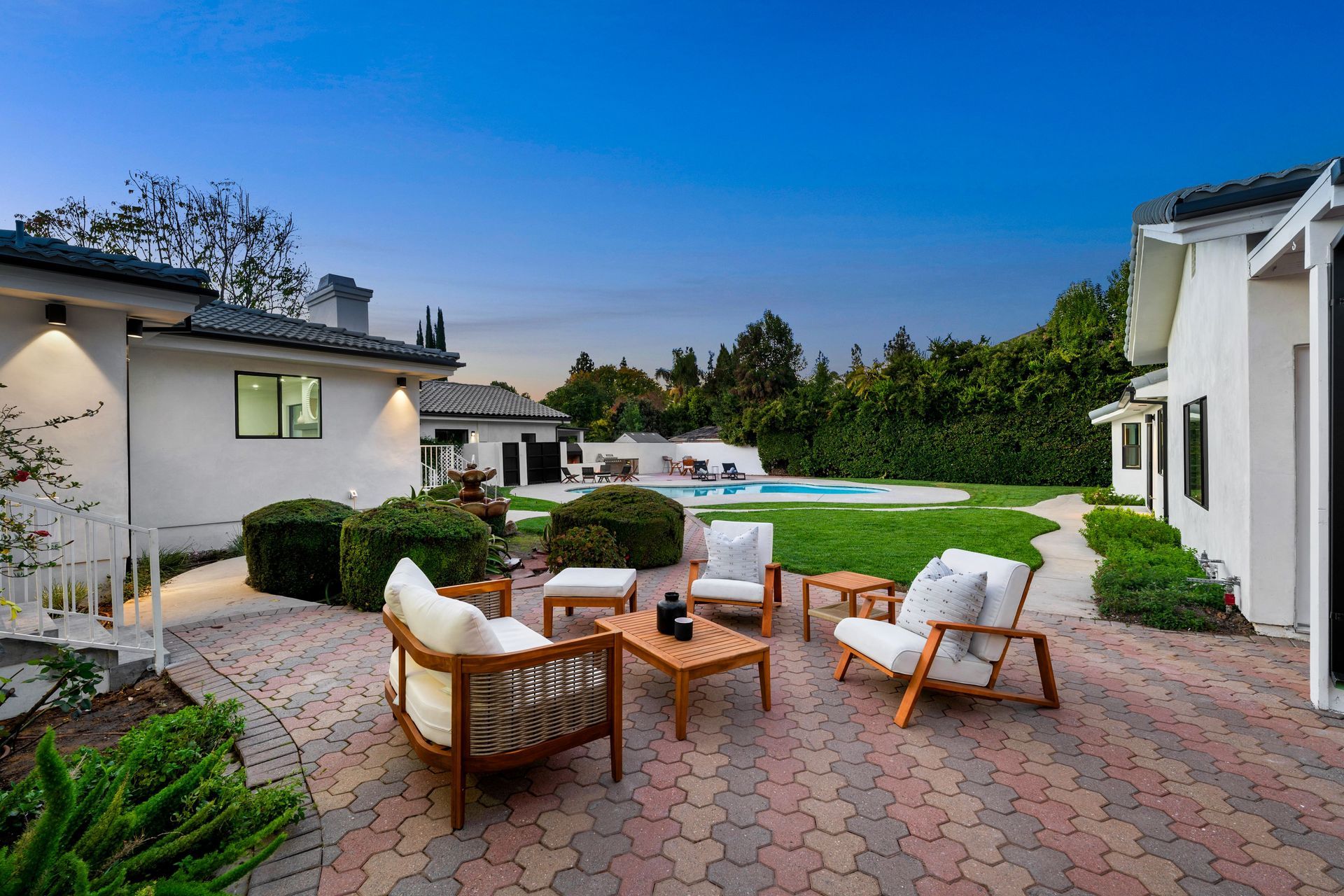
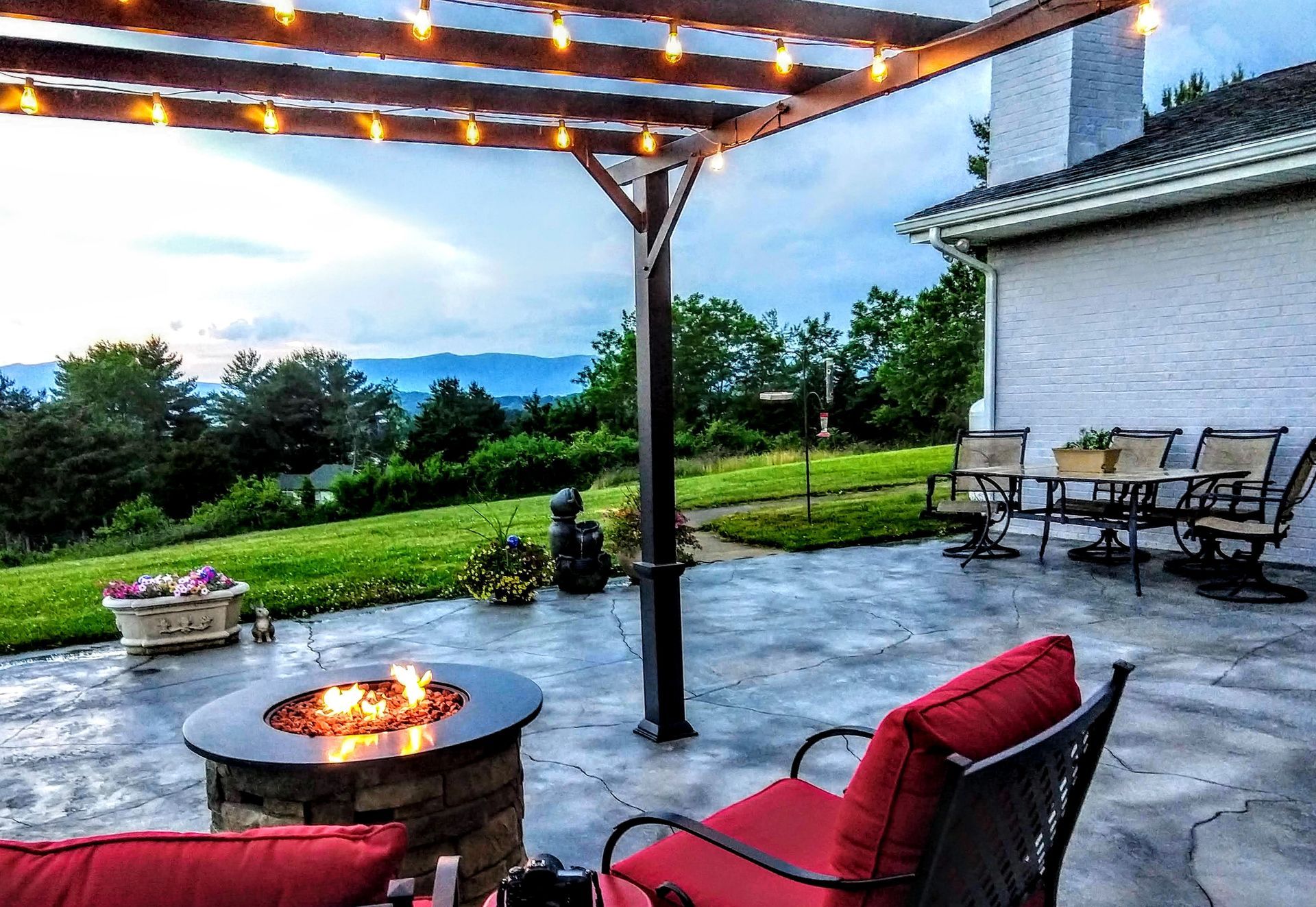
The fire pit is the anchor, but the seating and surroundings make it inviting. Surround it with comfortable seating, whether a ring of chairs, a built-in seating wall, or a sectional, and define the zone with a patio surface, gravel, or an outdoor rug. String lights overhead, low landscape lighting along paths, and plantings that soften the edges turn a fire pit into a true outdoor room. Our landscape lighting can tie the whole space together for evening use.
A built-in seating wall is one idea worth highlighting, because it does double duty: it provides permanent seating that never blows over or needs storing, and it visually frames the fire pit as an intentional outdoor room. Pair it with a few movable chairs for flexibility, and you have a space that comfortably handles both a quiet evening for two and a larger gathering. Softscape matters too, since well-placed plantings and a defined border make the area feel finished rather than like a fire pit dropped onto open lawn.
Ready to Build a Fire Pit You'll Actually Use?
Whether you want a simple built-in fire pit or a full outdoor living space designed around one, Lawn Pros can design and build it to last in our coastal climate. We are an experienced landscape and hardscape company serving Corpus Christi and the surrounding Coastal Bend, and we handle the whole project from design through construction. Call us at (361) 300-5772 or request a free quote through our website to get started.
Frequently Asked Questions