
Landscape Lighting Ideas for Safer, Better-Looking Outdoor Spaces
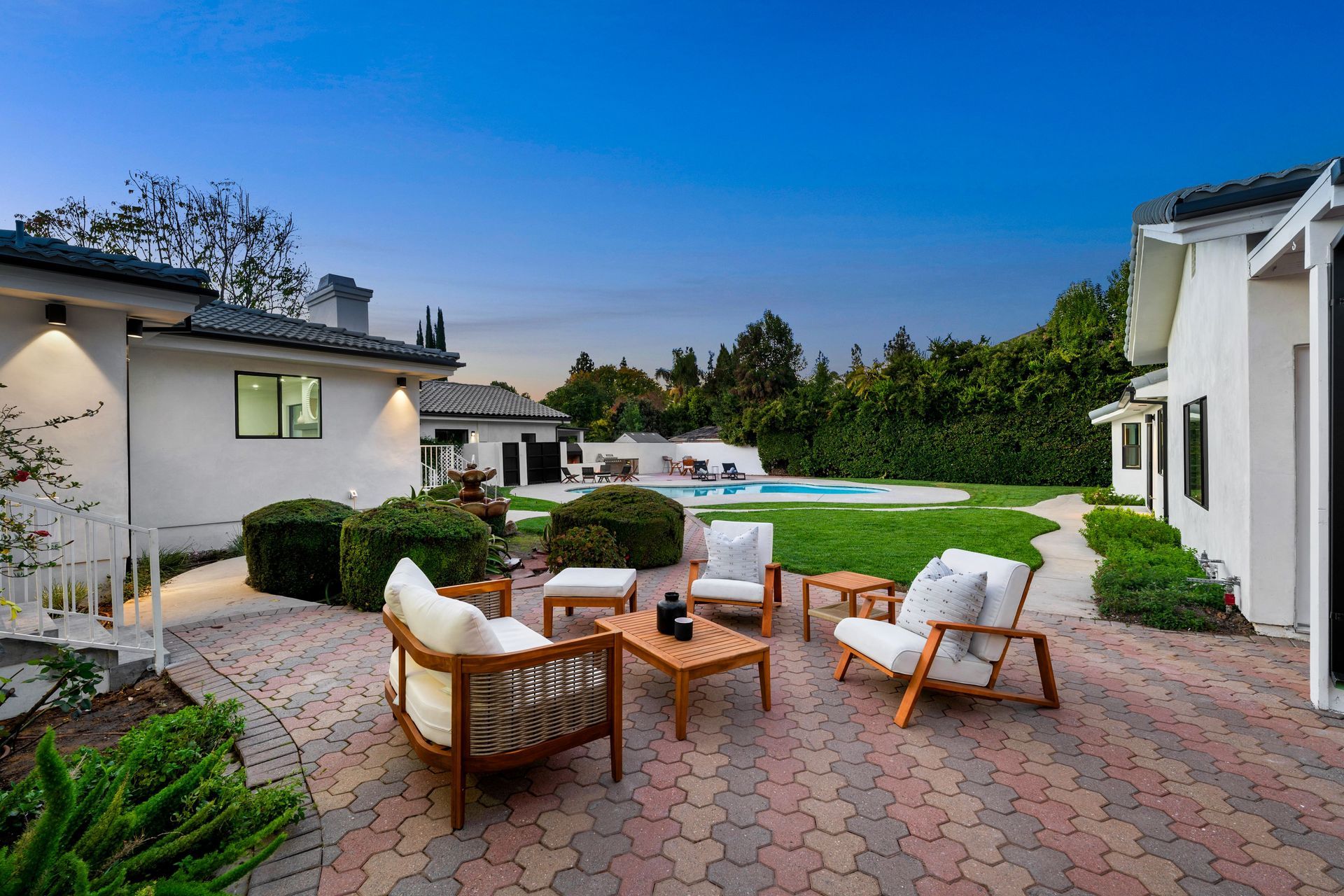
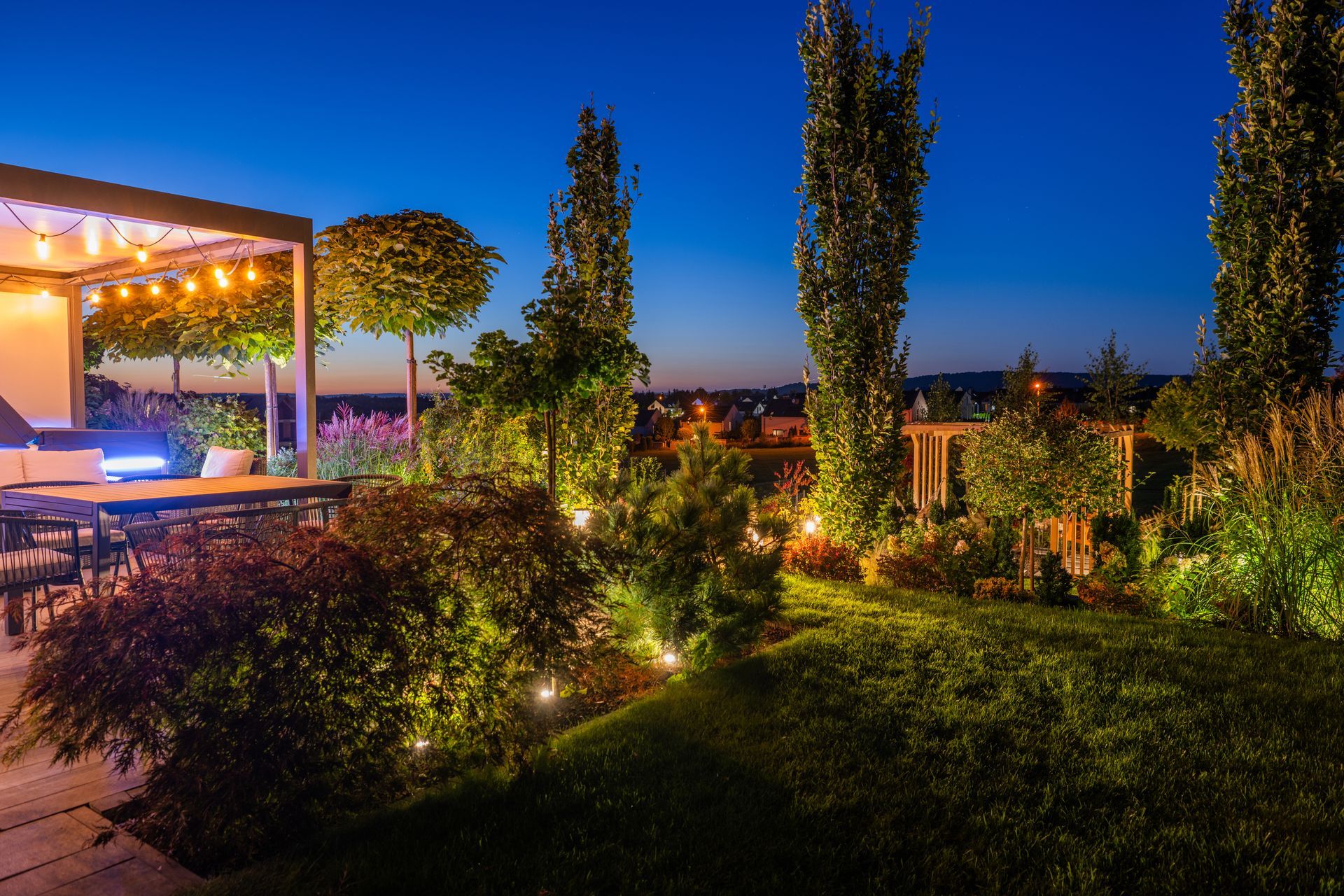
The most effective landscape lighting combines safety lighting where people walk with accent lighting on the features you want to show off. Start with path and step lights along walkways, entries, and changes in level, then add uplighting on trees and palms, wash lighting on the front of the house, and soft lighting around patios, outdoor kitchens, and fire pits. Warm-white, low-voltage LED fixtures with timers or photocells give a natural look and use little energy. In Corpus Christi, choose fixtures built for salt air and humidity, because standard painted fixtures corrode quickly near the coast.
Lawn Pros has been designing and installing landscapes, hardscapes, and low-voltage LED lighting systems in Corpus Christi and the Coastal Bend since 2019. We light everything from front-yard palms in Calallen to bayfront patios in Portland and Rockport, and we maintain the systems we install. This guide covers the lighting ideas that make the biggest difference, plus what we have learned about making them last in coastal conditions.
In This Guide
- Start With Safety Lighting: Paths, steps, and entries.
- Lighting Techniques at a Glance: Uplighting, moonlighting, and more.
- Lighting Trees and Palms: The South Texas centerpiece.
- Lighting the Front of the House: Curb appeal and security.
- Ideas for Patios, Kitchens, and Fire Pits: Lighting where you gather.
- Hardscape and Water Feature Lighting: Walls, steps, and fountains.
- Choosing Fixtures for Coastal Conditions: Salt air and humidity.
- Timers, Smart Controls, and Zones: Automating your lights.
- Common Landscape Lighting Mistakes: What to avoid.
- Planning and Cost: What to expect.
- Frequently Asked Questions: Quick answers.
Start With Safety Lighting
Good landscape lighting should make your property easier to use after dark before it makes it prettier. Focus first on the places people walk.
Where Safety Lighting Matters Most
These areas usually deserve light before anything decorative:
- Front walkways from the driveway or sidewalk to the door.
- Steps and changes in level, including porch steps, patio steps, and retaining wall stairs.
- Entry doors and gates, so visitors can see the lock and the house number.
- Driveway edges, especially on long driveways or near ditches.
- Pool and spa surroundings, where wet surfaces and edges create trip hazards.
- Side yards and paths to trash cans, sheds, or back gates.
How Much Light Is Enough
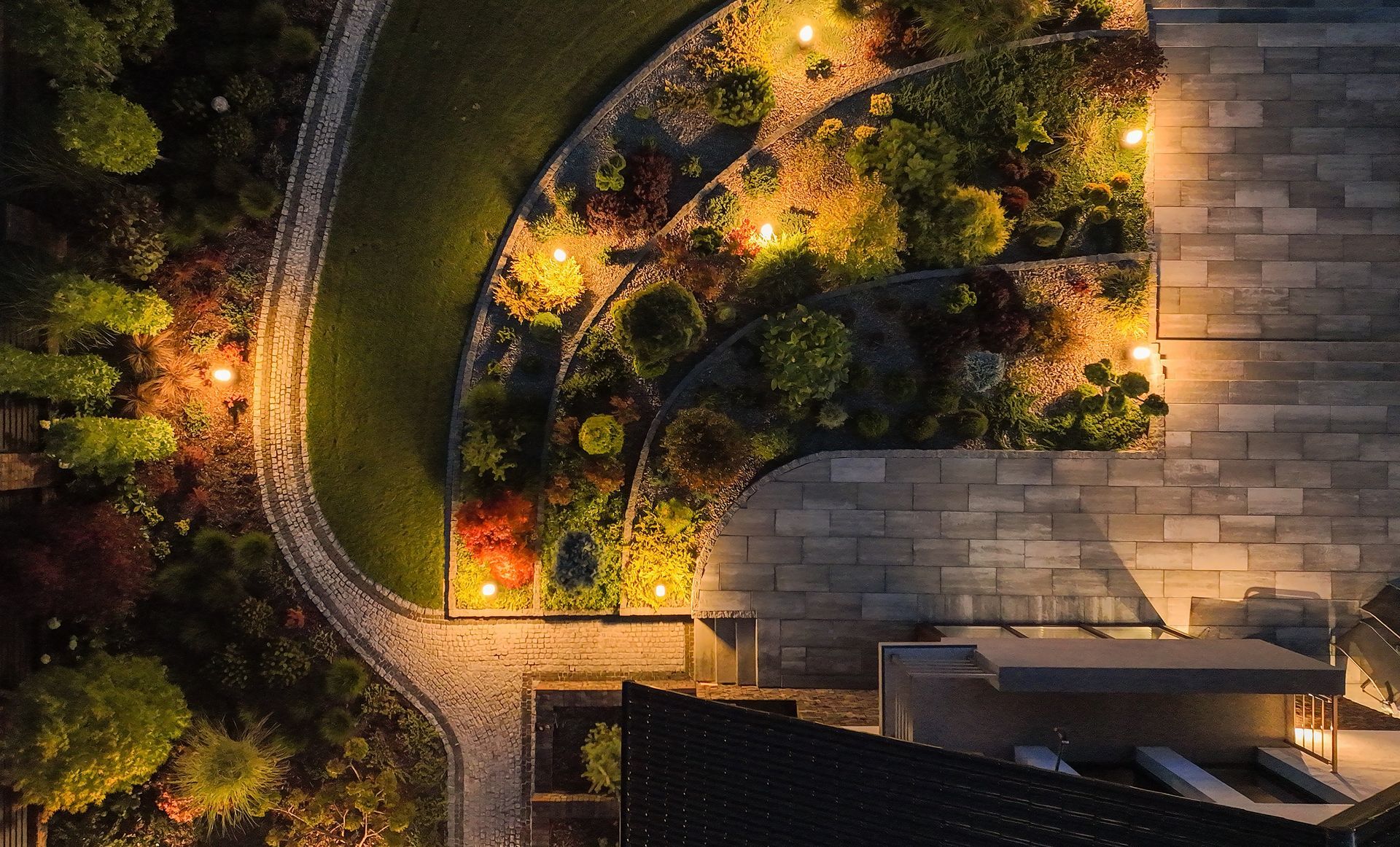
Path lights do not need to make a walkway as bright as day, and they should not shine into the eyes of people using it. Pools of soft light every several feet are usually enough to show the path and its edges. Too many fixtures in a row can look like a runway. Staggering lights on alternating sides of a path often looks more natural. If you are building or redoing a walkway, it is the ideal time to run wire underneath. Learn more about our
paver patios and walkways.
Lighting Techniques at a Glance
Most professional lighting designs use a mix of a few core techniques.
| Technique | What It Does | Best Used For |
|---|---|---|
| Uplighting | Fixtures aimed up from the ground | Trees, palms, columns, tall shrubs |
| Moonlighting | Fixtures mounted high in a tree, aimed down | Soft, dappled light over lawns and patios |
| Path lighting | Low fixtures that spread light on the ground | Walkways, garden borders |
| Wall washing | Wide, even light across a surface | The front of the house, privacy walls |
| Grazing | Light aimed close to a textured surface | Stone walls, brick, pavers |
| Silhouetting | Light placed behind a feature | Agaves, sculptural plants, fountains |
| Downlighting | Fixtures mounted on eaves or structures | Patios, outdoor kitchens, entries |
| Hardscape lights | Small fixtures built into walls and steps | Seat walls, stairs, retaining walls |
Layering two or three of these techniques usually looks better than relying on just one.
Lighting Trees and Palms
Trees and palms are often the most dramatic feature in a South Texas yard, and they respond beautifully to light.
Palms
Palms look best with one or two uplights placed close to the trunk and aimed up into the canopy. Tall palms may need a stronger fixture or two lights to reach the fronds. Sabal palms and other common Coastal Bend palms create striking shadows and textures at night.
Live Oaks and Shade Trees
Large live oaks can be uplit to show their wide branches, or moonlit by mounting fixtures high in the tree and aiming them down. Moonlighting creates soft, natural light with shadow patterns on the ground below, and it works well over patios and seating areas.
Sculptural Plants
Agaves, yuccas, and ornamental grasses look great silhouetted against a wall or grazed with a low fixture. If you are planning new plantings, our guide to
the best plants for South Texas landscaping can help you choose plants that also look good at night.
Lighting the Front of the House
Front-yard lighting adds curb appeal and makes a home feel safer.
Washing the Facade
Wide-beam fixtures placed in front of the house and aimed at the walls can softly light the front without glare. Uplighting between windows, rather than directly at them, keeps light from shining inside.
Highlighting Architecture
Columns, stone accents, and entry features can be grazed or uplit to add depth. On single-story homes common in Corpus Christi neighborhoods, a few well-placed fixtures often make a big difference. Stone and brick accents near the entry respond especially well to grazing, which brings out their texture after dark.
Security
Lighting around entries, windows, and dark corners makes it harder for anyone to approach unseen. Motion-activated lights on the sides and back of the house add another layer without keeping bright lights on all night.
Ideas for Patios, Kitchens, and Fire Pits
Outdoor living areas are where lighting does the most for how you use your yard.
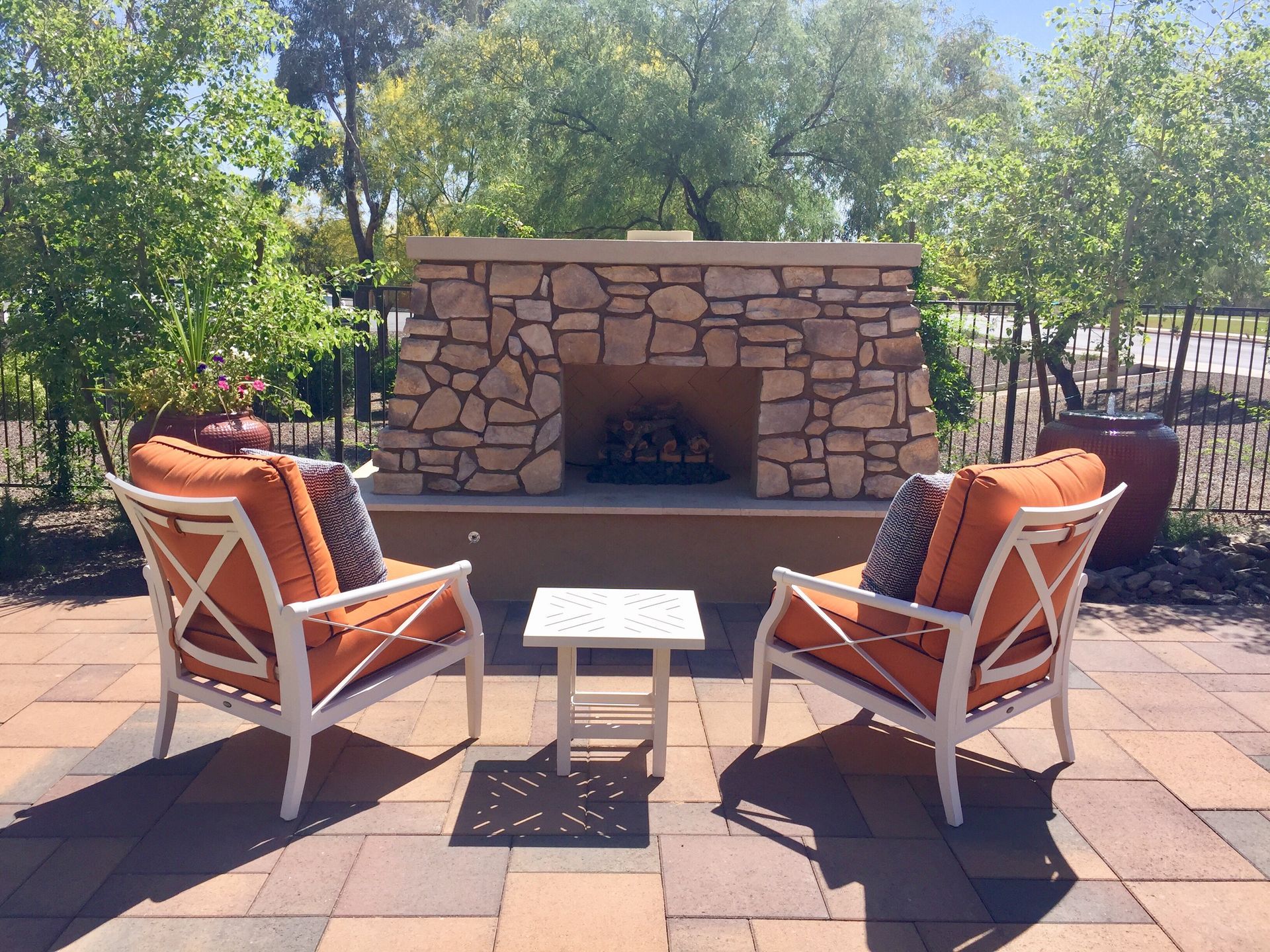
Patios and Seating Areas
Combine soft overhead light, such as downlights on a pergola or moonlighting from a nearby tree, with low lighting around the edges of the patio. String lights add a relaxed feel. Our guide to paver patio ideas covers layouts that work well with lighting.
Outdoor Kitchens
Kitchens need brighter task lighting over grills, prep areas, and counters, plus softer ambient light nearby. Under-counter lights and lights built into bar seating walls add style and help with safety. See our outdoor kitchen ideas for more inspiration.
Fire Pits
A fire pit is its own light source, so surrounding lighting should stay low and warm. Step lights in seat walls or soft path lighting around the area keep it safe without competing with the fire. Our fire pit ideas guide covers seating and layout.
Pool Areas
Pools look striking at night with in-pool lights, but the deck around them needs attention too. Low step lights along the pool edge, soft path lighting to the house, and gentle uplighting on nearby palms create a resort feel while keeping wet surfaces visible. Keep fixtures far enough from the water that they will not be splashed constantly, and avoid lights that glare off the water's surface toward seating areas.
Hardscape and Water Feature Lighting
Built-in lighting gives hardscapes a polished, finished look.
Walls and Steps
Small fixtures built into retaining walls, seat walls, and step risers light the ground without glare. They are best planned during construction, since adding them later can mean cutting into finished stone. Learn more about our retaining wall services.
Water Features
Underwater lights and lights aimed at falling water make fountains and waterfalls a nighttime focal point. Fixtures must be rated for underwater use. Lighting a waterfall from the front, or placing a light just under the spill point, makes moving water sparkle at night. Learn more about our
water features.
Choosing Fixtures for Coastal Conditions
This is where many lighting systems in the Coastal Bend fail early.
Salt Air and Humidity
Salt spray and humidity corrode metal fixtures, wire connections, and transformers. Painted aluminum fixtures from big-box stores can corrode within a few years near the water. Solid brass and copper fixtures cost more but hold up far better in coastal conditions, developing a natural patina instead of breaking down.
Sealed Connections
Wire connections are a common failure point. Waterproof, sealed connectors and properly buried wire prevent corrosion and flickering lights.
Low-Voltage LED Systems
Low-voltage LED systems are the standard for residential landscape lighting. They use far less energy than older halogen systems, run cooler, and last longer. A properly sized transformer with a timer or photocell turns lights on and off automatically.
Wind and Storms
Fixtures should be firmly staked or mounted to withstand coastal wind. After a major storm, it is worth checking for knocked-over fixtures, damaged wiring, or lights pushed out of aim. Before a hurricane, it can help to note where each fixture is aimed, so they are easier to reset afterward.
Beachfront Lighting Rules
If your property is near the beach on North Padre Island or Mustang Island, local lighting rules may apply to protect nesting sea turtles. Check current requirements before installing lights that face the beach.
Timers, Smart Controls, and Zones
How the lights are controlled affects both convenience and energy use.
Timers and Photocells
A photocell turns lights on at dusk, and a timer turns them off at a set hour. Together, they keep the system running automatically as sunset times change through the year.
Smart Transformers
Some transformers connect to an app, letting you adjust schedules, dim zones, or turn lights on from your phone. That is useful if you travel or want lights on only when you are entertaining.
Lighting Zones
Splitting the system into zones lets you keep safety lighting on later while turning off decorative lighting earlier. A common setup keeps paths and entries on all night and shuts off tree and facade lighting around bedtime.
Common Landscape Lighting Mistakes
These are the mistakes we see most often:
- Too much light, which creates glare and washes out the yard.
- Cool, blue-white bulbs that look harsh. Warm white, typically around 2700K to 3000K, looks more natural.
- Lights aimed into windows or neighbors' yards.
- A runway of evenly spaced path lights instead of natural, staggered placement.
- Cheap fixtures near the coast that corrode within a few seasons.
- No plan for growth, so fixtures end up buried by shrubs or blocked by branches.
Planning and Cost
Planning
A good lighting plan starts with a nighttime walkthrough to see how the yard looks after dark, where people walk, and which features deserve attention. Fixtures should be placed with mature plant sizes in mind and with room to expand later.
Cost
Most professionally installed residential landscape lighting systems in our area fall in the range of about $2,500 to $6,000, depending on the number of fixtures, fixture materials, and the size of the property. Larger and more complex systems cost more. Learn more about our landscape lighting services.
Ongoing Maintenance
Lighting systems need occasional care: cleaning lenses, adjusting fixtures as plants grow, checking connections, and replacing damaged parts. Seasonal holiday lighting is a separate service. See our
Christmas lighting page.
Light Up Your Yard With Lawn Pros
If you want a yard that is safer at night and looks great after sunset, we can design and install a lighting plan built for your property and coastal conditions. Browse our photo gallery or read our reviews.
Call Lawn Pros at (361) 300-5772 or
contact us for a free quote in Corpus Christi and surrounding Coastal Bend communities.
Frequently Asked Questions