
Fall Lawn Fertilization: When It Helps and When It Does Not in South Texas
Most fall lawn care advice online is written for cool-season grasses up north, and following it in South Texas can do your lawn more harm than good. Here, our lawns are warm-season grasses like St. Augustine, Bermuda, and Zoysia, and they respond to fall fertilization very differently. Done right, an early-fall feeding helps your lawn store energy for winter and green up faster in spring. Done wrong, a late or nitrogen-heavy feeding can leave your grass weak, diseased, and slow to recover.
At CC Lawn Pros, we have cared for lawns across Corpus Christi and the Coastal Bend since 2019, so we know what actually works in our climate rather than what a national label recommends. This guide explains when fall fertilization helps a South Texas lawn, when it hurts, and how to time it right.
In This Guide
- Why South Texas Is Different: Warm-season grass and our climate.
- When Fall Fertilization Helps: The early-fall window.
- When It Does Not Help: Late feeding and dormancy.
- What to Use and How Much: Choosing the right product.
- A Simple Fall Timeline: What to do and when.
- Fall Lawn Care Beyond Fertilizing: Rounding out the season.
- Frequently Asked Questions: Quick answers.
Why South Texas Is Different
The single most important thing to understand is that South Texas lawns are warm-season grasses, and that changes every rule about fall care. National advice assumes cool-season grasses, which behave in almost the opposite way.
Cool-season grasses like fescue and Kentucky bluegrass grow actively in fall, so feeding them heavily in autumn makes sense up north. Warm-season grasses, the St. Augustine, Bermuda, and Zoysia that cover most Corpus Christi yards, do the opposite. As days shorten and nights cool, they slow down, stop growing, and shift energy from the blades into the roots to prepare for winter dormancy. Feeding them like a northern lawn works against that natural process. Add in our alkaline coastal soils and mild but real winter cool-downs, and it becomes clear why a generic bag of fall fertilizer is the wrong tool. The goal in our region is not to push growth in fall but to help the grass harden off and store reserves.
Our coastal setting adds a couple of wrinkles worth knowing. The Coastal Bend stays warmer later into the year than most of the country, which stretches the growing season and can tempt homeowners into feeding when the grass is already winding down. At the same time, our humid air and occasional cool, damp stretches create prime conditions for lawn disease, and lush growth pushed by a poorly timed feeding is exactly what those diseases feed on. So the warm-season rules matter here even more than in a dry inland climate, because the penalty for feeding at the wrong time shows up as disease as well as cold damage. Reading your lawn and the calendar together, rather than a national label, is what keeps it healthy.
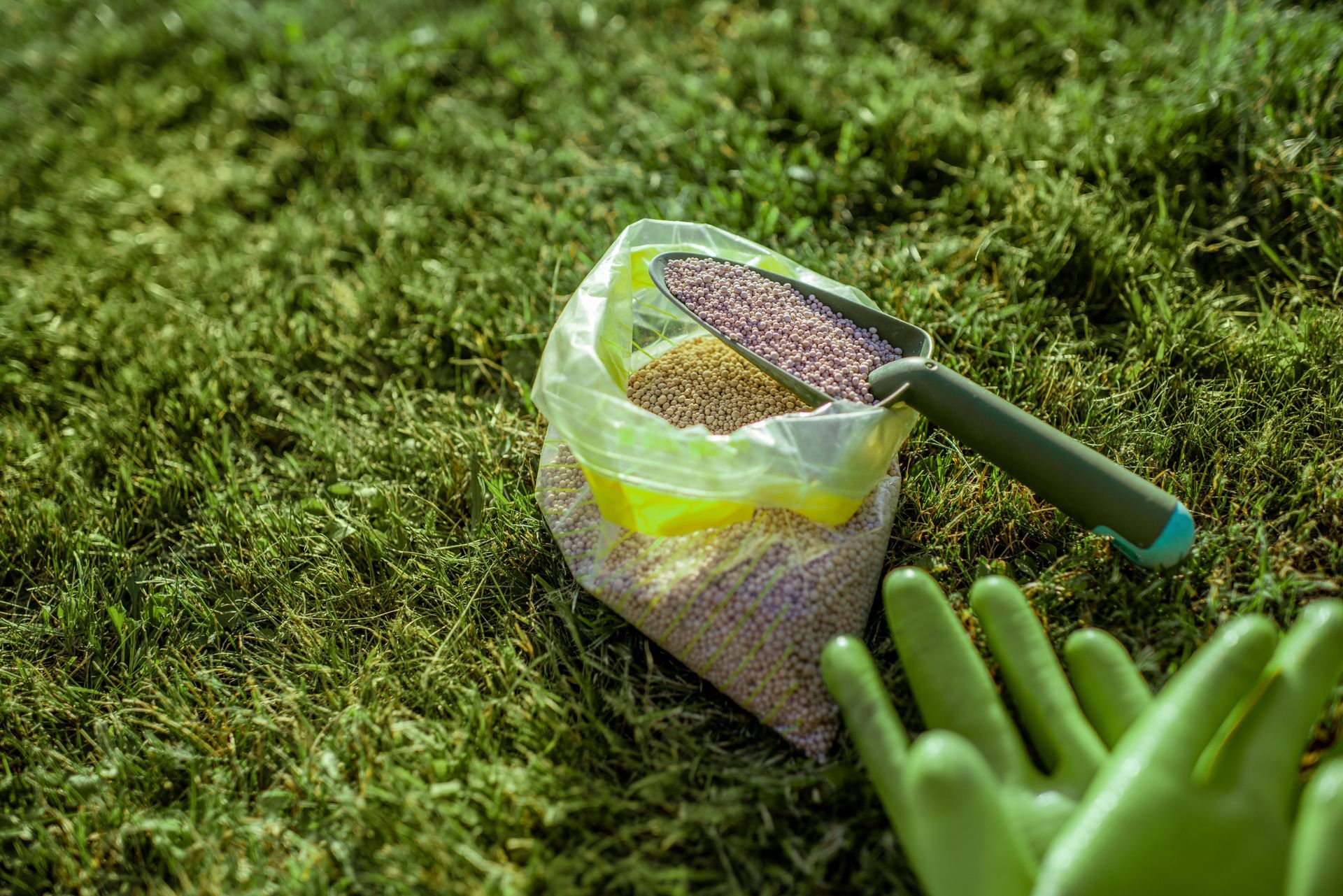
When Fall Fertilization Helps
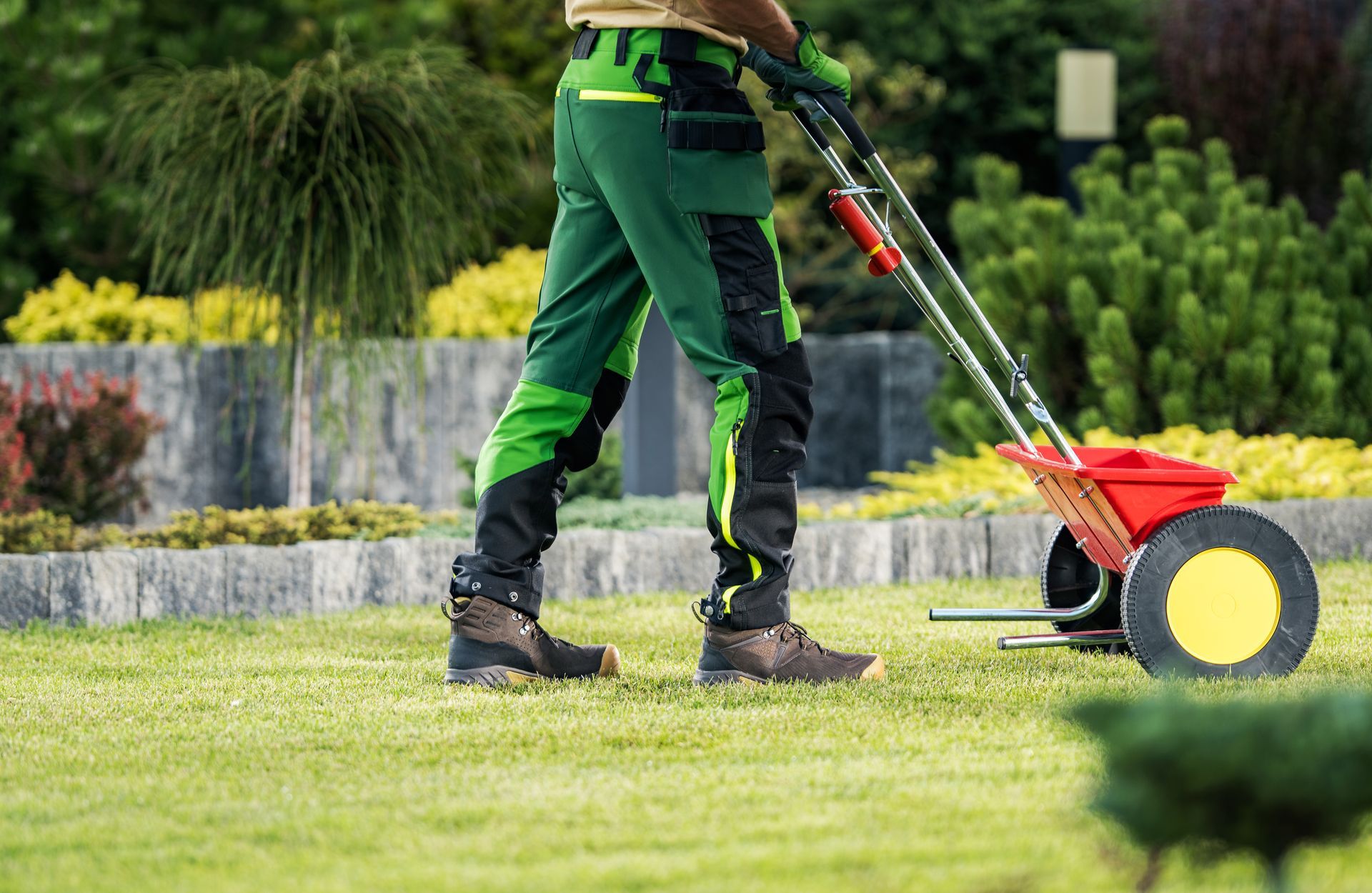
Timed correctly, a fall feeding is one of the most valuable things you can do for a South Texas lawn, because it sets up next year's growth. The key is early fall, while the grass is still actively growing.
The Early-Fall Window
In our climate, the useful window is generally late summer into early fall, roughly September into early October, while soil temperatures are still warm and the grass is still growing. A feeding in this window helps the lawn recover from the punishing summer heat, build carbohydrate reserves in the roots, and improve its winter hardiness. That stored energy is what fuels a thicker, faster green-up the following spring, which is the real payoff of fall fertilization done right.
Why It Works
At this point in the year, the grass can still take up and use nutrients, so the feeding goes toward root strength rather than a flush of tender top growth. Focusing on root development and winter resilience, rather than blade growth, is exactly what a warm-season lawn needs heading into the cooler months. This is the difference between a lawn that shrugs off winter and one that limps into spring. It also pays dividends you will not see until months later, since the carbohydrate reserves the grass banks now are what drive a quicker, denser green-up when the weather warms, giving you a head start on the growing season while unfed lawns are still waking up.
When It Does Not Help
Just as important as knowing when to feed is knowing when not to, because the wrong timing does real damage. Two mistakes are common in our area, and both are easy to avoid once you understand them.
The first mistake is a late-fall, nitrogen-heavy feeding. Applying a high-nitrogen fertilizer too late in the fall forces new, tender growth right when the grass should be hardening off, and that soft growth is vulnerable to cold snaps and to the diseases that thrive in cool, humid coastal conditions. It is a common way to end up with damaged or patchy turf. The second mistake is fertilizing dormant grass in the depths of winter. Once soil temperatures drop and the grass goes dormant, it cannot absorb nutrients, so a winter application is wasted at best and can feed weeds instead of your lawn. In short, later is not better with fall fertilization, and pushing growth at the wrong time undoes the benefit entirely.
What to Use and How Much
Choosing the right product matters as much as timing, and for a fall feeding the formula should look different from what you would use in summer. The label numbers tell the story once you know what to look for.
Fertilizer is labeled with three numbers, the N-P-K ratio for nitrogen, phosphorus, and potassium. For a fall feeding on warm-season grass, the aim is lower nitrogen and higher potassium, since potassium supports root strength and winter hardiness rather than pushing top growth. A product marketed as a winterizer often fits this profile. A few principles keep it simple:
- Favor potassium over nitrogen in the fall to harden the grass off rather than force growth.
- Consider a soil test first, since our coastal soils vary and a test tells you what your lawn actually needs.
- Follow label rates and do not overapply, because too much fertilizer stresses roots and invites disease.
- Water it in appropriately so the nutrients reach the root zone without runoff into our waterways.
Because the right product and rate depend on your specific grass and soil, this is an area where a local pro can save you money and guesswork. Our
lawn fertilization service matches the feeding to your lawn and the season.
A Simple Fall Timeline
To pull it all together, it helps to see the season at a glance, because the calendar is really what separates a feeding that helps from one that hurts. Use this as a general guide for a Coastal Bend lawn.
In early fall, roughly September into early October, apply a potassium-focused feeding while the grass is still growing to build root reserves. Through mid to late fall, hold off on nitrogen and focus on good mowing and watering habits as the grass slows down. In winter, when the grass is dormant, do not fertilize at all, and instead keep the lawn clear of heavy leaf cover and debris. Then in spring, resume regular feeding once the grass greens up and is actively growing again. For a fuller look at year-round timing, see our guide on the
best times to fertilize your yard in Texas.
| Season | What to Do | Why |
|---|---|---|
| Early fall (Sep to early Oct) | A potassium-focused feeding | Builds roots and winter hardiness |
| Mid to late fall | Hold nitrogen; mow and water well | Avoids tender growth before cold |
| Winter (dormant) | Do not fertilize | Grass cannot absorb nutrients |
| Spring green-up | Resume regular feeding | Grass is actively growing again |
Fall Lawn Care Beyond Fertilizing
Fertilizing is only one piece of getting a South Texas lawn ready for the cooler months, and a few other habits protect all the work that feeding does. Rounding out your fall routine keeps the lawn healthy from the roots up.
Keep mowing at the recommended height for your grass rather than scalping it low, because taller blades help the lawn store energy and insulate the crown and roots as temperatures drop. Ease off watering as the weather cools and the grass slows, but do not stop entirely, since roots still need moisture heading into winter, especially during our dry spells. Keep the lawn clear of thick leaf cover and debris, which can smother the grass and trap the moisture that leads to fungal disease in our humid coastal air. Early fall is also the right time to think about a pre-emergent if winter weeds are a problem in your yard, since stopping weeds before they germinate is far easier than fighting them later. Taken together, these steps let your fall feeding do its job and set the stage for a strong spring green-up, rather than leaving the lawn to fend for itself through winter.
Get Your Fall Lawn Care Right With CC Lawn Pros
Fall is a make-or-break season for a South Texas lawn, and the difference between helping and hurting it comes down to timing and the right product. For lawn care that fits our climate, not a national label, CC Lawn Pros is here to help.
Call CC Lawn Pros at (361) 300-5772 or
contact us online for a free quote. Serving Corpus Christi, Portland, Rockport, and the surrounding Coastal Bend. Explore our
lawn fertilization and
lawn mowing services.
Frequently Asked Questions