
Artificial Turf Maintenance: How to Keep Synthetic Grass Looking Good
At CC Lawn Pros, we install and service artificial turf across Corpus Christi, Portland, Rockport, and the rest of the Coastal Bend. We build the base and seam the rolls ourselves, and we come back for brushing, infill top-offs, and warranty repairs. That gives us a clear view of which maintenance habits keep turf looking new and which problems show up when they slip. This guide covers what we tell our own customers.
Quick Answer: Artificial turf needs about 15 to 30 minutes of care a week, plus a deeper cleaning a few times a year. Clear debris often, rinse dust and pollen when your watering rules allow, and brush the fibers upright in high-traffic areas. Check infill, seams, and edges once or twice a year. In Corpus Christi, also watch for blown sand, reflected window heat, fire ants, and storm debris.
In This Guide
- A Realistic Maintenance Schedule: What to do and how often.
- Routine Cleaning and Brushing: Debris, rinsing, and grooming.
- Coastal Bend Problems to Watch For: Sand, heat, ants, weeds, storms.
- Keeping Infill Where It Belongs: The part most people forget.
- Pet Areas and Odor: Keeping dog runs fresh.
- Stains and Spot Cleaning: Spills, sap, and gum.
- What Not to Do: Habits that damage turf.
- When to Call a Pro: Problems that need service.
- Get Help With Turf Maintenance: Brushing and repair service.
- Frequently Asked Questions: Quick answers.
A Realistic Artificial Turf Maintenance Schedule
Turf takes far less work than a St. Augustine lawn, but skipping the small tasks catches up with you. Here is the schedule we recommend for a typical Corpus Christi backyard.
| Task | How Often | Why It Matters Here |
|---|---|---|
| Blow or rake off leaves and debris | Weekly, more in spring leaf drop | Organic matter breaks down into soil that weeds can root in |
| Rinse dust, pollen, and salt film | Monthly, within current city watering rules | Coastal wind leaves a dull film on the fibers |
| Cross-brush high-traffic areas | Every few weeks | Keeps paths and play zones from matting flat |
| Pick up pet waste and rinse urine spots | Daily to weekly | Heat speeds up odor in dog areas |
| Walk seams and edges | Twice a year and after storms | Catches lifting edges before they tear |
| Check infill depth | Twice a year | Low infill lets fibers lay down and the backing heat up |
| Deep brushing and infill top-off | Once a year | Restores the look and feel of a new install |
On a small yard, the weekly part takes less time than one mowing used to.
Routine Cleaning and Brushing
Most turf that looks tired after a few years was not worn out. It was matted, dusty, and short on infill.
Clear Debris Before It Breaks Down
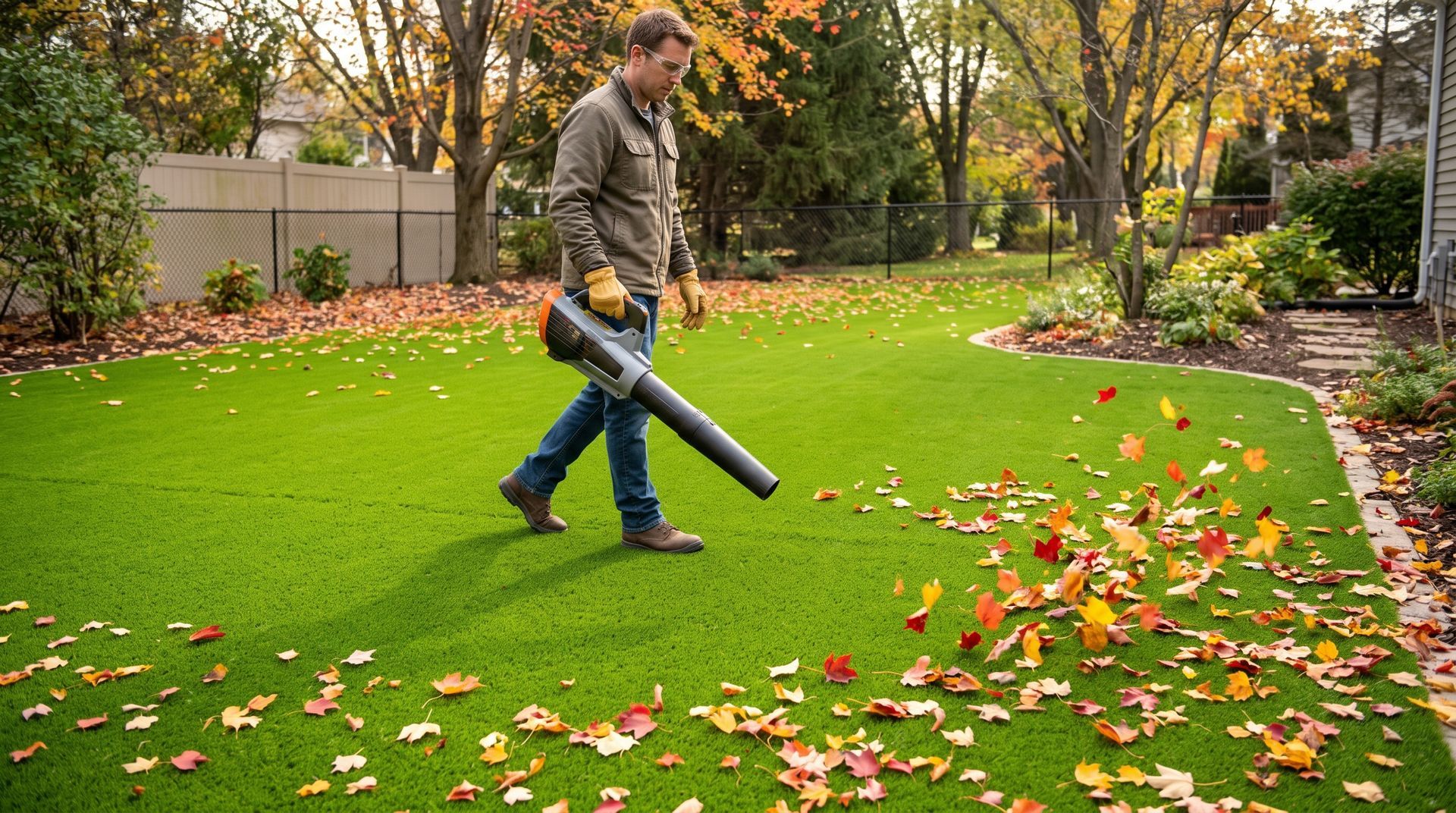
Live oak leaves, palm fronds, and blown mulch do more harm than they seem to. As they sit and break down, they form a thin layer of organic matter on top of the infill. Weed seeds land in that layer and root. A leaf blower on a low setting or a plastic leaf rake handles most of it. Get to it before a rain soaks everything into the fibers.
Rinse Within Corpus Christi's Water Rules
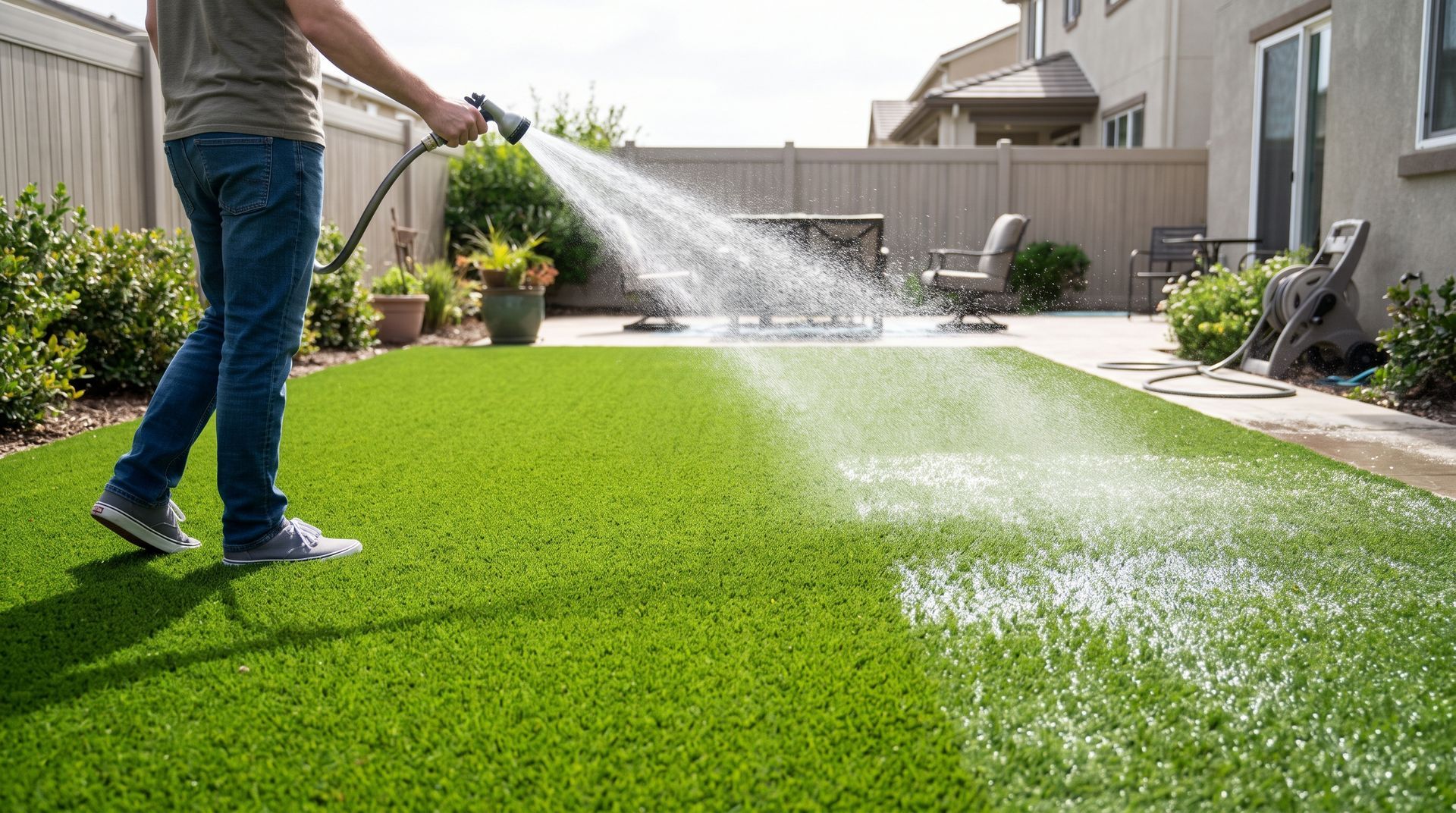
A light rinse with a hose clears dust, pollen, and the salty film coastal wind leaves behind. Corpus Christi spent much of 2025 and 2026 under strict drought stages before moving to Stage 1 restrictions in late August 2026. Water stages can change quickly here, so check the city's current rules before you rinse. When outdoor water use is tight, skip the full-yard rinse and spot-clean only the areas that need it, such as pet spots and spills. Rain does a lot of this work for free.
Brush Against the Grain
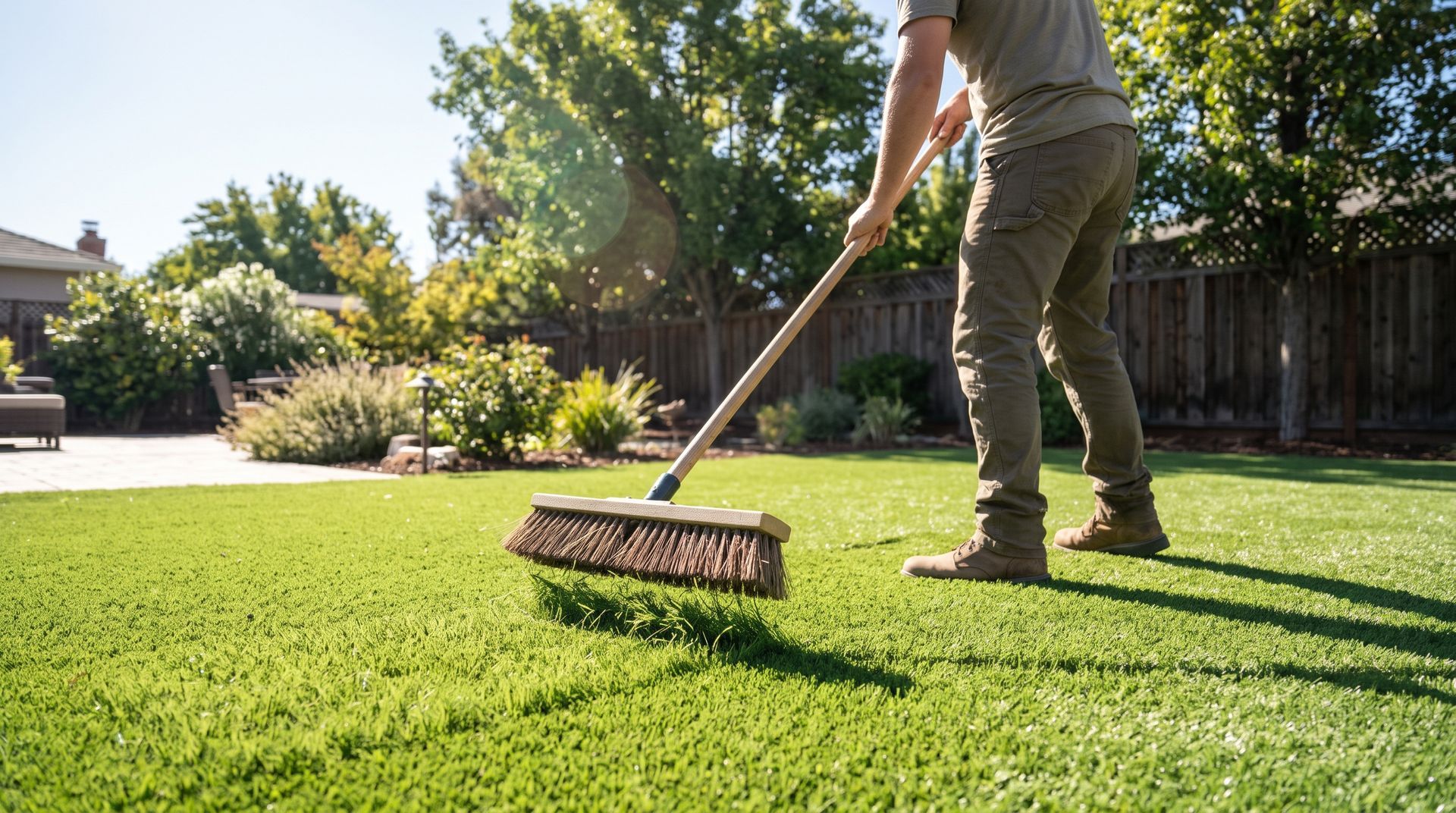
Foot traffic pushes fibers over in one direction. Brushing against that direction stands them back up and works the infill evenly between the blades. Use a stiff broom with synthetic bristles, never a metal rake. On larger yards, a power broom does in minutes what takes an hour by hand. Focus on paths, the area around patio doors, and anywhere kids or dogs run.
Coastal Bend Problems National Guides Skip
Most turf maintenance advice online is written for places with snow and mild sun. Our yards face a different set of problems.
- Blown sand and salt that dull the color and work into the infill, especially closer to the bay and on the islands.
- Reflected heat from energy-efficient windows that can melt streaks into the fibers.
- Fire ants that mound up along edges and seams.
- Bermudagrass and nutsedge creeping in from beds and neighboring lawns.
- Hurricane season debris that can tear seams or leave branches embedded in the surface.
- Intense UV that fades low-grade turf to a yellow-green within a few summers.
Melted Streaks From Low-E Windows
Low-E glass reflects heat to keep homes cool. On some days and angles, a slightly curved pane can focus that reflection onto the lawn hot enough to melt synthetic fibers. The damage usually shows up as a glossy, curled stripe that lines up with a window at a certain time of day. Replacing the turf without fixing the reflection just means melting it again. Window screens, anti-reflective film, an awning, or a shade tree in the right spot can solve it. We also check for this risk on west- and south-facing walls before we install.
Fire Ants
Fire ants like the warm, loose base under turf. Mounds push up the surface near edges and seams and can loosen the infill. Treat mounds with a bait product labeled for fire ants as soon as you see activity, and keep up a regular baiting schedule in spring and fall. Avoid digging into the turf to reach them, since that can damage the base.
Weeds at the Edges
The weed barrier under the base stops most growth from below. What gets through usually comes in sideways from beds and lawns, or roots in debris on top. Pull weeds while they are small, and spot-treat edges with a herbicide labeled for the weed you are dealing with. A clean edge restraint and a mulch or rock border make a big difference. Our mulch and rock installation service can build a cleaner transition between turf and beds.
Before and After a Storm
Before a named storm, put away loose furniture and toys that can drag across the surface. Afterward, clear branches by lifting them rather than dragging them. Walk the seams and edges, and look for standing water that does not drain within a few hours. That can point to base damage worth checking. Our guide to
yard drainage solutions covers water problems that start beyond the turf itself.
Keeping Infill Where It Belongs
Infill is the sand or specialty granule brushed down between the fibers. It holds the blades upright, weighs the turf down, and protects the backing from UV. Over time it migrates, washes toward low spots, and compacts.
Signs Your Infill Is Low
These are the signs we look for when we check infill on a service visit:
- Fibers lay flat even right after you brush them.
- You can see the backing when you part the blades with your fingers.
- The turf feels thin or hard underfoot instead of cushioned.
- Sand collects in low spots or along edges after heavy rain.
- The surface feels hotter than it used to, since less infill shades the backing.
Infill loss is gradual, so these signs tend to appear in high-traffic areas and slopes first.
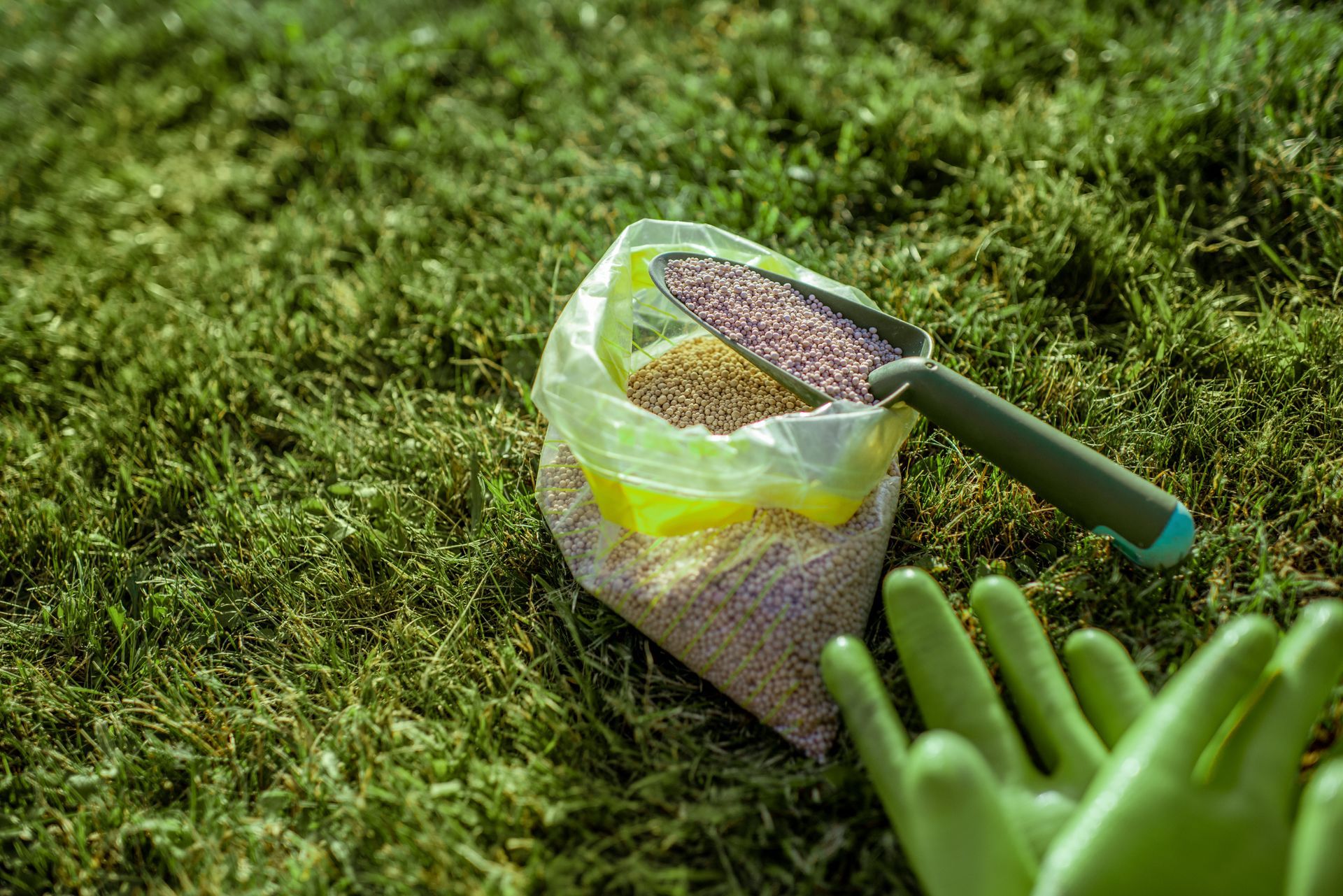
Topping It Off
A light top-off with the same type of infill used at installation, spread with a drop spreader and brushed in evenly, usually solves it. Adding too much at once can leave the surface sandy and stiff, so it is better to add a little, brush, and check again. Using a different product can change how the turf drains and feels. If you are not sure what went in, call your installer before buying a bag. We record the infill type on every job we install.
Pet Areas and Odor
Dogs and turf can work well together, but pet areas need more frequent care than the rest of the yard. Pick up solid waste daily and rinse urine areas regularly within your current watering rules. An enzyme cleaner made for artificial turf breaks down odor-causing residue instead of masking it.
If odor keeps coming back, the problem is usually below the surface. That can mean the wrong infill for a pet area or a base that does not drain well. Our
artificial turf installation page explains the pet-specific options we use, including odor-control infill and drainage-focused backing.
Stains and Spot Cleaning
Most spills come out with warm water and a little mild dish soap, blotted and then rinsed. Act quickly with drinks, grease from a grill area, or sunscreen. Tree sap and gum come out more easily if you harden them first with a bag of ice and then lift them off. For tougher stains, use a cleaner made for synthetic turf and test it on a hidden area first. Avoid bleach and strong solvents, which can discolor fibers or weaken the backing.
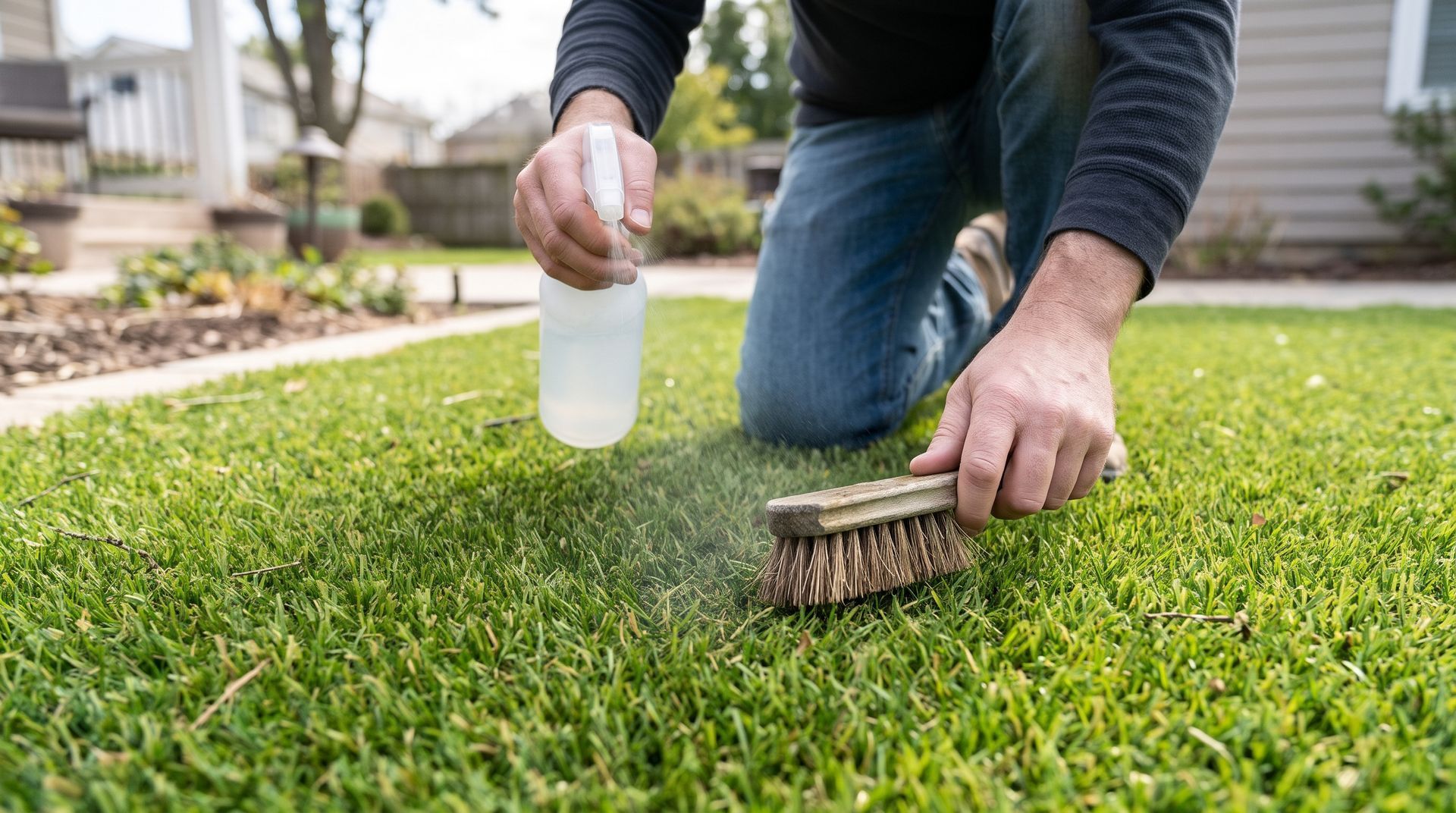
What Not to Do With Artificial Turf
Most turf damage we repair comes from a few avoidable habits.
- Do not use a pressure washer up close, since a tight, high-pressure spray can blast out infill and loosen seams.
- Do not use metal rakes or stiff wire brushes that tear fibers.
- Do not set grills, fire pits, or smokers directly on the turf, and keep cigarettes and fireworks away from it.
- Do not park cars or heavy equipment on residential turf unless it was built for that load.
- Do not let leaves and debris sit for weeks, since they turn into a growing medium for weeds.
- Do not cut into seams or edges to fix a lift yourself, which usually makes the gap bigger.
When to Call a Pro
Some problems are beyond routine care and get worse if you wait. Call your installer if you notice any of these:
Seams and Edges
Seams that open or show as visible lines and edges that lift at sidewalks, beds, or driveways need professional repair. Left alone, they catch toes, toys, and pet claws, and the gap tears further.
Ripples, Dips, and Puddles
Wrinkles that do not relax in the heat, low spots, and water that sits after rain usually point to the base, not the turf. Base problems are fixed by lifting the turf and rebuilding that section.
Matting, Odor, or Melting That Keeps Coming Back
If brushing no longer stands the fibers up, pet odor returns days after cleaning, or new melted streaks appear, there is an underlying cause to find. That may be low infill, drainage, or a reflection source.
Get Help With Artificial Turf Maintenance in Corpus Christi
We offer brushing service, infill top-offs, seam and edge repair, and warranty work for the turf we install across Corpus Christi and the Coastal Bend. If your turf was installed by someone else, we can still take a look and tell you what it needs. We also install putting greens, which have their own grooming needs.
If you are still deciding whether turf is right for your yard, our guides to artificial turf vs. grass and artificial turf cost in Corpus Christi are good places to start. We serve Corpus Christi, Portland, Rockport, Aransas Pass, and surrounding communities.
Call CC Lawn Pros at (361) 300-5772 or
request a free quote. Our office is at 6113 Saratoga Blvd in Corpus Christi.
Frequently Asked Questions